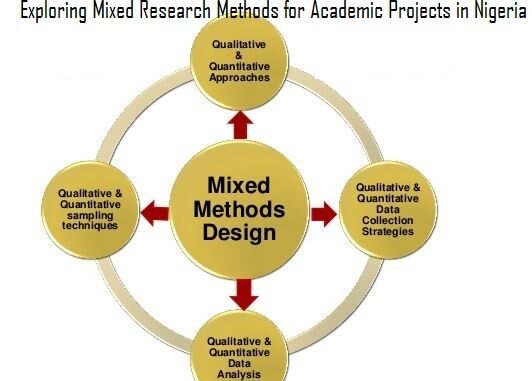
Research is the foundation of evidence-based decision-making. Whether you’re writing an undergraduate project, conducting postgraduate research, evaluating a business strategy, improving healthcare delivery, or performing user research for a digital product, choosing the right research design can determine the quality and credibility of your research findings.
For decades, researchers often relied on either qualitative research or quantitative research. While each method offers unique strengths, many real-world research problems are too complex to be fully understood through a single research approach. Numbers may reveal patterns and trends, but they rarely explain why they exist. Similarly, interviews and observations can provide rich insights into human experiences but may not always demonstrate how widespread those experiences are.
This challenge has led to the growing popularity of mixed method research design, an approach that combines qualitative methods and quantitative methods within a single study to produce a more complete understanding of a research question.
Instead of asking researchers to choose between stories and statistics, mixed method research recognizes that both forms of evidence have value. Quantitative data can measure relationships, frequencies, and outcomes, while qualitative data helps explain meanings, motivations, experiences, and contexts. By integrating these two perspectives, researchers can gain a deeper insight into complex issues and produce findings that are both statistically reliable and contextually meaningful.
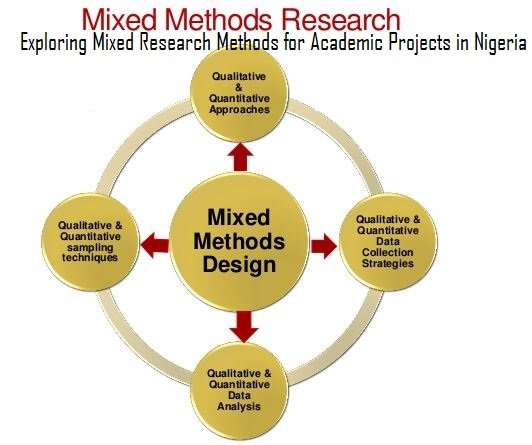
Today, mixed methods research is widely adopted across various disciplines. Universities encourage postgraduate students to use it when addressing multifaceted research questions. Businesses employ mixed methods in marketing research and product discovery to understand customer behavior. Governments use it to evaluate public policies, while healthcare professionals rely on it to assess patient outcomes alongside personal experiences. Educational researchers also use mixed methods research designs to evaluate teaching strategies, learning outcomes, and institutional effectiveness.
The increasing demand for evidence-based decisions has made mixed methods one of the most respected and versatile research methods available. Rather than viewing qualitative research and quantitative research as competing paradigms, this approach integrates them into a single, coherent study design that strengthens the credibility of the overall analysis.
However, simply collecting two different types of data does not automatically qualify a project as mixed method research. Effective mixed methodology requires careful planning, a clear research process, and a deliberate strategy for integrating different methods. Researchers must determine how the quantitative and qualitative components relate to one another, how data will be collected, and how the combined findings will answer the original research question.
This comprehensive guide explores every essential aspect of mixed methods research design. You’ll learn what it is, why it’s important, its defining characteristics, the philosophy behind it, the major mixed methods research designs, practical applications, advantages, limitations, and best practices for conducting high-quality research. Whether you’re a beginner preparing your first academic project or an experienced researcher seeking to refine your methodology, this guide will provide the knowledge needed to confidently apply a mixed methods approach.
What Is Mixed Methods Research Design?
Mixed methods research design is a systematic research design that combines quantitative research and qualitative research within a single study or a series of related mixed methods studies to answer a research question more comprehensively than either approach could achieve independently.
Unlike traditional research approaches that focus exclusively on numerical measurements or descriptive narratives, mixed methods research intentionally integrates both forms of evidence during one or more stages of the research process. This integration allows researchers to compare, validate, explain, or expand their results, ultimately leading to a more comprehensive understanding of the phenomenon being investigated.
In practice, a mixed methods design may begin with surveys to collect numerical data from a large population, followed by interviews to explore the reasons behind the statistical patterns. Alternatively, a researcher might first conduct interviews to identify key themes and then develop a questionnaire to test those themes among a larger sample. In both cases, the value lies not merely in using different methods, but in integrating them to strengthen the overall analysis and interpretation.
One defining feature of mixed methods research is that it acknowledges the limitations of relying solely on one method. For example, a survey might reveal that student satisfaction has declined in a university, but it cannot fully explain the reasons. Conducting follow-up interviews allows the researcher to explore students’ experiences in greater depth, producing qualitative findings that complement the statistical results. The combination provides a richer, more balanced perspective than either quantitative method or qualitative inquiry could deliver independently.
In essence, mixed methods research designs seek to answer not only “what happened?” but also “why did it happen?”, “how did it happen?”, and “what does it mean?” This ability to address multiple dimensions of a problem makes the approach especially valuable for complex research topics where social, behavioral, educational, or organizational factors interact.
A Simple Definition
In simple terms, mixed methods research design is a research approach that combines quantitative methods and qualitative methods in a planned and systematic way to generate stronger evidence, improve the credibility of research findings, and provide a more complete understanding of the issue being studied.
The emphasis is not on collecting more data but on collecting the right combination of data that best addresses the research problem.
Key Features of Mixed Methods Research
Several characteristics distinguish mixed methods research from other research designs:
- It integrates qualitative and quantitative evidence within the same study.
- It uses both numerical and descriptive data to answer the same research question.
- It follows a structured research process with planned integration rather than simply using multiple techniques.
- It aims to provide a comprehensive understanding of complex phenomena.
- It enables researchers to validate one set of findings with another through complementary evidence.
- It is flexible and can be adapted to various academic and professional fields.
These features explain why mixed methods has become increasingly popular among researchers seeking more reliable and meaningful conclusions.
Why Is Mixed Methods Research Design Important?
Modern research often involves problems that cannot be fully understood through statistics alone or personal experiences alone.
Consider a university investigating why student engagement has decreased. A survey might reveal that only 48% of students participate actively in lectures. While this quantitative evidence identifies the extent of the issue, it does not explain the underlying causes. Conducting interviews or focus group discussions may reveal concerns about teaching styles, learning resources, or classroom environments. Combining both sources of information enables the institution to develop targeted interventions supported by stronger evidence.
The same principle applies in healthcare. A hospital evaluating patient satisfaction may collect numerical ratings while also interviewing patients about their experiences. Likewise, businesses conducting marketing research may combine customer surveys with in-depth interviews during product discovery to uncover not only what customers prefer but also why they make those choices.
These examples demonstrate that mixed methods research goes beyond collecting more information, it creates meaningful connections between different types of evidence. This integrated perspective often produces more actionable recommendations and more trustworthy research findings.
Why Researchers Prefer Mixed Methods Research
Researchers increasingly adopt mixed methods research because it:
- Produces richer and more balanced evidence.
- Strengthens the credibility of the overall analysis.
- Reduces the weaknesses associated with relying on a single method.
- Improves decision-making by combining measurable outcomes with human experiences.
- Generates a deeper insight into complex issues.
- Supports evidence-based policy, education, healthcare, business, and social science decisions.
Rather than treating qualitative research and quantitative research as opposing approaches, mixed methods research design recognizes that both contribute valuable perspectives. When thoughtfully integrated, they produce evidence that is often more convincing, practical, and useful than either approach alone.
History and Evolution of Mixed Methods Research
The practice of combining different approaches to investigate a research problem is not entirely new. Long before the term mixed methods research became widely recognized, researchers from various disciplines had already begun using multiple techniques to understand complex issues. However, these combinations were often informal and lacked a clearly defined methodological framework.
During much of the twentieth century, research was largely divided into two distinct traditions. One emphasized objective measurement, numerical data, and statistical testing, while the other focused on understanding people’s experiences, meanings, and social realities through observation and interpretation. These traditions were frequently viewed as incompatible, leading to what became known as the “paradigm wars” of the 1970s and 1980s.
Supporters of quantitative approaches argued that scientific knowledge should be based on measurable evidence and objective analysis. In contrast, advocates of qualitative inquiry maintained that many human experiences could not be reduced to numbers and required interpretation within their social and cultural contexts.
As researchers encountered increasingly complex social, educational, and organizational challenges, they began to realize that neither tradition could answer every research question on its own. Measuring a phenomenon could reveal what was happening, but often failed to explain why. Conversely, exploring personal experiences could provide rich explanations but sometimes lacked the broader perspective needed for generalization.
This realization gradually shifted thinking from choosing between two competing approaches to integrating them in meaningful ways.
One of the most influential figures in this development was John W. Creswell, whose work helped establish mixed methods research as a distinct methodological field. Alongside Vicki L. Plano Clark and several other scholars, Creswell developed structured research designs that explained not only how qualitative and quantitative data could be collected together but also how they should be integrated throughout a study.
Today, mixed methods research is recognized as a rigorous methodology in its own right. Universities teach it as a core component of research methodology courses, while researchers across education, healthcare, psychology, business, engineering, and public policy increasingly rely on it to answer complex questions.
The growing availability of advanced statistical software, qualitative analysis tools, and digital data collection platforms has further strengthened its adoption. Researchers can now integrate diverse forms of evidence more efficiently than ever before, making mixed methods research one of the most versatile approaches available in modern research.
Characteristics of Mixed Methods Research Design
Although mixed methods research can take many forms, several characteristics distinguish it from approaches that rely exclusively on qualitative or quantitative techniques.
1. Intentional Integration
The defining characteristic of mixed methods research is integration.
Collecting survey responses and conducting interviews within the same project does not automatically make a study a mixed methods study. The researcher must intentionally connect the two sources of evidence so they contribute to answering the same research question.
Integration may occur during data collection, analysis, interpretation, or across several stages of the research process.
2. Multiple Sources of Evidence
Mixed methods research draws upon different forms of evidence to produce a broader understanding of a problem.
For example, an educational researcher investigating student performance might combine:
- Examination results
- Classroom observations
- Student interviews
- Teacher questionnaires
- School records
Each source contributes unique information, while together they create a more complete picture.
3. Complementary Strengths
One approach often compensates for the limitations of the other.
For instance, survey data may identify a decline in employee satisfaction, but interviews can explain the reasons behind those statistics. Likewise, qualitative observations may generate ideas that can later be tested using quantitative techniques.
This complementary relationship is one of the greatest strengths of mixed methods research.
4. Flexibility
Mixed methods research is highly adaptable.
Researchers can choose different sequences depending on the nature of the research problem. In some studies, numerical data are collected first and qualitative information follows. In others, the order is reversed.
Some projects collect both forms of data simultaneously, while others embed one approach within another.
This flexibility allows researchers to design studies that best fit their objectives rather than forcing every project into the same structure.
5. Focus on Complex Problems
Mixed methods research is especially valuable when a research problem involves multiple dimensions.
Issues such as educational achievement, healthcare quality, customer satisfaction, organizational performance, or community development often involve both measurable outcomes and human experiences.
A single method may capture only one side of these issues. Combining approaches enables researchers to explore them more comprehensively.
6. Practical Orientation
Mixed methods research is often selected because it supports practical decision-making.
Organizations, governments, universities, and businesses frequently need evidence that is both statistically reliable and contextually meaningful. By integrating numerical trends with detailed explanations, researchers can produce recommendations that are more useful for policy and practice.
7. Emphasis on Interpretation
The value of mixed methods research lies not simply in collecting different kinds of data but in interpreting them together.
Researchers compare patterns, identify agreements or contradictions, and explain how one set of findings informs the other.
This stage of interpretation transforms separate pieces of evidence into coherent conclusions.
The Philosophical Foundation of Mixed Methods Research
Every research methodology is influenced by a philosophical perspective that shapes how knowledge is understood and how research should be conducted.
Mixed methods research is most commonly associated with pragmatism.
Rather than insisting that one research philosophy is universally superior, pragmatism argues that researchers should choose methods based on their ability to answer the research question effectively.
In other words, the research problem determines the methodology, not the other way around.
This philosophy encourages researchers to remain flexible and practical. If statistical analysis is needed to understand one aspect of a problem, it should be used. If interviews or observations are necessary to explain those results, they should also be included.
The emphasis is on selecting the most appropriate tools for the task rather than adhering rigidly to a single tradition.
Why Pragmatism Fits Mixed Methods Research
Pragmatism supports mixed methods research because it:
- Places the research question at the center of methodological decisions.
- Recognizes that different forms of evidence can complement one another.
- Encourages practical solutions to real-world problems.
- Accepts that knowledge can be generated through multiple ways of inquiry.
- Values outcomes that are useful for both theory and practice.
This perspective has contributed significantly to the widespread acceptance of mixed methods research across academic and professional disciplines.
A Practical Example
Imagine a university wants to understand why first-year students have low class attendance.
A researcher could distribute questionnaires to hundreds of students to identify attendance patterns and possible contributing factors. The results might show that transportation challenges and timetable conflicts are common concerns.
However, the numbers alone cannot explain how these issues affect students’ daily experiences. By conducting follow-up interviews with selected participants, the researcher may discover additional factors such as family responsibilities, financial pressures, or feelings of social isolation.
When both sources of evidence are interpreted together, the university gains a richer understanding of the problem and can design interventions that address not only the statistical trends but also the lived experiences behind them.
This example illustrates why mixed methods research has become an increasingly valuable approach for investigating complex issues that cannot be fully understood through a single perspective.
When Should You Use Mixed Methods Research?
Mixed methods research is most appropriate when a single source of evidence cannot provide a complete answer to the research question.
Some research problems are straightforward and can be addressed using one method alone. For example, if a company wants to determine the percentage of customers who prefer a particular product, a well-designed survey may be sufficient. Similarly, if a researcher wants to understand the personal experiences of cancer survivors, in-depth interviews alone may provide the necessary insights.
However, many real-world issues are far more complex.
Imagine a university notices that graduation rates have declined over the past five years. Statistical records can identify the trend and reveal which departments are most affected, but they cannot explain why students are leaving before completing their programmes. Interviews with students, lecturers, and academic advisers may uncover factors such as financial hardship, inadequate academic support, mental health challenges, or curriculum-related concerns.
In this situation, neither numbers nor narratives alone tell the complete story. Combining both provides stronger evidence for decision-making.
As a general rule, mixed methods research is a good choice when you need both measurable evidence and contextual understanding.
Situations Where Mixed Methods Research Is Most Effective
Although mixed methods research can be applied in almost any discipline, it is particularly valuable in certain situations.
1. When the Research Problem Is Complex
Many social and organizational issues involve multiple interacting factors.
For example, improving employee productivity may require understanding workplace culture, leadership style, employee motivation, training opportunities, and organizational policies. Measuring performance alone may overlook the human factors influencing those outcomes.
Mixed methods allow researchers to explore both dimensions.
2. When One Method Cannot Fully Answer the Research Question
Sometimes, the initial findings from one method raise additional questions.
A survey may indicate that customer satisfaction has fallen, but it cannot explain what specific experiences caused dissatisfaction.
Follow-up interviews, observations, or focus groups can provide explanations that the numerical data cannot capture.
3. When Validation Is Important
Researchers often seek to confirm findings using more than one source of evidence.
Suppose a questionnaire suggests that teachers are satisfied with a new curriculum. Classroom observations and interviews can help determine whether their responses accurately reflect their day-to-day experiences.
When different sources support similar conclusions, confidence in the findings increases.
4. When Developing or Improving Existing Programmes
Educational institutions, healthcare providers, businesses, and government agencies frequently evaluate programmes before expanding or modifying them.
For example:
- A hospital may assess a new patient-care system.
- A company may evaluate employee training programmes.
- A university may review a revised curriculum.
- A government agency may assess the effectiveness of a social intervention.
These evaluations often require both performance indicators and personal experiences.
5. When Exploring New Topics
In emerging fields where limited research exists, qualitative exploration can help identify important themes.
Researchers can then design quantitative instruments to examine those themes among larger populations.
This approach is particularly useful when developing new theories or measurement scales.
Disciplines That Frequently Use Mixed Methods Research
One of the strengths of mixed methods research is its versatility. It has become increasingly common across a wide range of academic and professional fields.
Education
Researchers investigate topics such as:
- Student engagement
- Academic performance
- Teaching effectiveness
- Curriculum development
- Inclusive education
Combining examination results with classroom observations and interviews often provides richer conclusions than relying on one source alone.
Healthcare
Healthcare professionals frequently combine clinical outcomes with patient experiences.
For example, a treatment may successfully reduce symptoms according to medical tests, while interviews reveal concerns about side effects or quality of life.
Together, these findings support more patient-centred healthcare decisions.
Business and Marketing
Businesses increasingly rely on mixed methods research to understand customer behaviour.
Customer surveys may identify purchasing patterns, while interviews or usability testing explain why customers make certain decisions.
This approach is widely used in product development, brand evaluation, customer experience studies, and service improvement.
Public Policy
Government agencies often evaluate public programmes by combining statistical indicators with feedback from affected communities.
For example, employment statistics may show improvements following a youth empowerment programme, while interviews reveal challenges participants continue to face.
Social Sciences
Researchers studying poverty, migration, crime, family dynamics, or community development often combine demographic data with personal narratives to understand both trends and lived experiences.
Key Components of a High-Quality Mixed Methods Study
Conducting mixed methods research successfully requires more than simply collecting two kinds of data. Every well-designed study includes several essential components that work together to ensure the research is coherent, reliable, and meaningful.
A Clearly Defined Research Problem
Every study begins with a problem that requires investigation.
A clearly stated research problem provides direction for the entire project and influences decisions about data collection, participant selection, and analysis.
Without a well-defined problem, even the most sophisticated research design will struggle to produce meaningful results.
Well-Developed Research Questions
Strong research questions serve as the foundation of any study.
In mixed methods research, questions should allow both quantitative and qualitative evidence to contribute toward answering the same issue.
For example:
Main Research Question
How does online learning influence academic performance among university students?
Supporting questions might include:
- What percentage of students report improved academic performance?
- What factors influence students’ online learning experiences?
- How do students describe the challenges they encounter?
Together, these questions create opportunities for integrating different forms of evidence.
Appropriate Sampling Strategy
Researchers must decide:
- Who will participate?
- How many participants are needed?
- How will they be selected?
In some studies, the same participants contribute both quantitative and qualitative data.
In others, different participant groups may be selected depending on the objectives of each phase.
The sampling strategy should always align with the overall research design.
Appropriate Data Collection Methods
The quality of any study depends heavily on the quality of its data.
Mixed methods research often combines several techniques, including:
- Surveys
- Questionnaires
- Interviews
- Focus group discussions
- Classroom or workplace observations
- Existing institutional records
- Document analysis
Each method should contribute unique information rather than duplicate evidence unnecessarily.
Data Integration
Perhaps the most important characteristic of mixed methods research is integration.
After collecting quantitative and qualitative data, researchers must examine how the findings relate to one another.
Questions to consider include:
- Do both sets of findings support the same conclusion?
- Are there differences that require further explanation?
- What new understanding emerges when both forms of evidence are considered together?
Integration transforms separate results into a coherent explanation.
Interpretation and Conclusions
The final stage involves drawing conclusions that reflect all available evidence.
Rather than discussing quantitative and qualitative findings separately, researchers should explain how they complement, reinforce, or even challenge one another.
This integrated interpretation is what distinguishes mixed methods research from studies that simply use multiple data collection techniques.
Factors to Consider Before Choosing Mixed Methods Research
Although mixed methods research offers many advantages, it is not always the most suitable choice.
Before selecting this approach, researchers should carefully evaluate several practical considerations.
Time
Mixed methods studies generally require more time than single-method studies because two forms of data must be collected, analysed, and integrated.
Resources
Additional resources may be required for:
- Data collection
- Software
- Participant recruitment
- Transcription
- Statistical analysis
- Qualitative coding
Researchers should ensure these resources are available before beginning the study.
Research Skills
Successful mixed methods research requires competence in both qualitative and quantitative techniques.
Where researchers lack expertise in one area, collaboration with experienced colleagues can improve the quality of the study.
Research Objectives
The most important consideration remains the research question itself.
Researchers should avoid selecting mixed methods simply because it is popular or appears more sophisticated.
Instead, they should ask:
Will combining qualitative and quantitative evidence genuinely improve my ability to answer the research question?
If the answer is yes, mixed methods research may be the most appropriate choice.
Types of Mixed Methods Research Designs
Although several variations exist, six designs are widely recognized in research methodology. Each has a unique structure, purpose, and area of application.
1. Convergent Parallel Design
The Convergent Parallel Design, sometimes called the convergent design is one of the most commonly used mixed methods designs.
In this design, qualitative and quantitative data are collected during the same phase of the study. The two datasets are analyzed independently before being merged during interpretation.
The primary goal is to compare both sets of findings to determine whether they support, complement, or contradict one another.
Example
Suppose a university wants to evaluate the effectiveness of online learning.
The researcher may:
- Distribute questionnaires to 500 students to obtain numerical data on satisfaction and academic performance.
- Conduct interviews with 30 students to understand their personal experiences.
Both datasets are analyzed separately before being integrated to draw overall conclusions.
Advantages
- Saves time because data collection occurs simultaneously.
- Provides immediate comparison of findings.
- Strengthens confidence when results agree.
Limitations
- Requires expertise in both forms of analysis.
- Conflicting findings can be difficult to interpret.
2. Explanatory Sequential Design
The Explanatory Sequential Design is one of the most widely used mixed methods designs in educational and social science research.
As the name suggests, the study begins with quantitative data collection and analysis. The results then guide the qualitative phase, which seeks to explain or clarify the statistical findings.
This design answers questions such as:
- Why did these results occur?
- What factors influenced the observed trends?
- How do participants interpret the quantitative findings?
Example
A researcher discovers that employee job satisfaction has declined by 25% over three years.
After analyzing the survey data, selected employees are interviewed to explore possible reasons for the decline.
The interviews provide context that the numerical data alone cannot explain.
When to Use It
This design is particularly useful when quantitative findings require further explanation.
Strengths
- Clear and logical structure.
- Easy to communicate.
- Provides detailed explanations for statistical results.
Limitations
- Requires more time because data are collected in stages.
- The second phase depends on the quality of the first.
3. Exploratory Sequential Design
The Exploratory Sequential Design follows the opposite sequence.
Instead of beginning with numbers, the researcher starts with qualitative exploration.
Themes identified during interviews, observations, or focus groups are then used to design surveys or other quantitative instruments.
This approach is particularly useful when little prior knowledge exists about the research topic.
Example
A researcher wants to understand the factors influencing students’ adoption of artificial intelligence tools for learning.
The study begins with interviews involving a small group of students.
Common themes emerging from these discussions are later transformed into survey questions distributed to hundreds of students.
The second phase tests whether the identified themes are common across a larger population.
Advantages
- Useful for developing new theories.
- Helps create reliable questionnaires.
- Suitable for emerging research areas.
Limitations
- Time-consuming.
- Requires careful transition from qualitative findings to quantitative measurement.
4. Embedded Design
An Embedded Design integrates one method within another dominant research approach.
Unlike convergent or sequential designs, one methodology plays the primary role while the second provides supporting information.
Example
A clinical trial evaluating a new treatment may primarily rely on quantitative measurements such as blood pressure, recovery time, and laboratory results.
However, patient interviews may also be conducted to understand their experiences during treatment.
Although qualitative information is collected, the study remains largely quantitative.
Similarly, an educational researcher may conduct classroom observations while embedding short surveys to provide additional evidence.
When to Use It
- Programme evaluation.
- Clinical research.
- Educational interventions.
- Experimental studies.
Advantages
- Adds depth without changing the primary design.
- Provides complementary evidence.
Limitations
- The embedded method may receive limited attention.
- Integration requires careful planning.
5. Transformative Design
A Transformative Design is guided by a specific theoretical or social perspective.
The primary objective extends beyond understanding a phenomenon; it seeks to promote change, address inequality, or amplify underrepresented voices.
Researchers often use this design when studying issues related to:
- Gender equality.
- Disability inclusion.
- Social justice.
- Human rights.
- Community development.
Example
A researcher examining access to higher education for students with disabilities may combine institutional statistics with personal interviews.
While quantitative data identify enrollment patterns, qualitative narratives reveal barriers that numbers alone cannot capture.
The integrated findings support recommendations for more inclusive educational policies.
Strengths
- Addresses complex societal issues.
- Encourages meaningful change.
- Gives voice to marginalized groups.
Limitations
- Interpretation may be influenced by the guiding theoretical perspective.
- Requires careful consideration of ethical issues.
6. Multiphase Design
A Multiphase Design consists of several interconnected studies conducted over an extended period.
Each phase contributes to a broader research programme.
For example:
Phase One:
Identify community health challenges.
Phase Two:
Develop an intervention.
Phase Three:
Evaluate implementation.
Phase Four:
Measure long-term outcomes.
Although each phase may use different methods, all contribute to answering the same overarching research objective.
Advantages
- Suitable for large-scale research projects.
- Produces comprehensive evidence.
- Supports long-term programme evaluation.
Limitations
- Expensive.
- Requires significant planning.
- Often involves multidisciplinary research teams.
Choosing the Right Mixed Methods Design
There is no universally “best” mixed methods design.
The most appropriate choice depends on several factors:
- The research objectives.
- The nature of the research question.
- Available resources.
- Time constraints.
- Researcher’s methodological expertise.
- Type of evidence required.
For example:
| Research Goal | Recommended Design |
|---|---|
| Compare qualitative and quantitative findings | Convergent Design |
| Explain statistical results | Explanatory Sequential |
| Develop survey instruments | Exploratory Sequential |
| Support an experiment | Embedded Design |
| Address social justice issues | Transformative Design |
| Conduct long-term evaluation | Multiphase Design |
The key is selecting a design that aligns with the purpose of the study rather than choosing one because it appears more sophisticated.
The Mixed Methods Research Process
Although individual studies differ, most follow a similar sequence.
Step 1: Identify the Research Problem
Every study begins with a clearly defined problem.
The researcher should explain:
- Why the problem is important.
- What gap exists in current knowledge.
- Why mixed methods are appropriate.
Step 2: Develop Research Questions
Research questions guide every subsequent decision.
Well-written questions should be clear, focused, and answerable using integrated evidence.
Step 3: Select the Appropriate Design
The researcher chooses the design that best addresses the objectives of the study.
At this stage, decisions are also made regarding timing, priority, and integration.
Step 4: Collect Data
Depending on the chosen design, qualitative and quantitative data may be collected:
- Simultaneously.
- Sequentially.
- As embedded components.
Step 5: Analyze Each Dataset
Quantitative and qualitative data are usually analyzed separately using techniques appropriate to each type.
This prevents one form of evidence from influencing the analysis of the other prematurely.
Step 6: Integrate Findings
This is the defining stage of mixed methods research.
Researchers compare both datasets to identify:
- Agreements.
- Contradictions.
- Complementary evidence.
- Unexpected discoveries.
The objective is to produce conclusions that neither dataset could provide independently.
Step 7: Interpret Results and Report Conclusions
The final report should present an integrated interpretation rather than two disconnected studies.
Readers should clearly understand how both sources of evidence contributed to answering the research question.
Data Collection Methods
Mixed methods research offers flexibility in data collection. Researchers select techniques based on the nature of the research problem and the design being used.
Common quantitative methods include:
- Structured questionnaires.
- Surveys.
- Standardized tests.
- Existing statistical databases.
- Institutional records.
Common qualitative methods include:
- Semi-structured interviews.
- Focus group discussions.
- Participant observation.
- Document analysis.
- Reflective journals.
Using multiple sources of evidence helps improve the richness and credibility of the study.
Sampling in Mixed Methods Research
Sampling determines who will participate in the study.
Researchers may use:
Probability Sampling
Suitable for quantitative phases where generalization is important.
Examples include:
- Simple random sampling.
- Stratified sampling.
- Cluster sampling.
- Systematic sampling.
Non-Probability Sampling
Frequently used during qualitative phases.
Examples include:
- Purposive sampling.
- Snowball sampling.
- Convenience sampling.
- Criterion sampling.
Some studies combine both approaches, allowing each phase to use the most appropriate sampling strategy.
Data Analysis and Integration
One of the defining strengths of mixed methods research is that it integrates two different forms of analysis.
Quantitative data are commonly analyzed using descriptive statistics, correlation, regression analysis, or hypothesis testing.
Qualitative data are often examined through thematic analysis, content analysis, narrative analysis, or coding techniques.
However, the real value lies in integration.
Researchers ask questions such as:
- Do both datasets support the same conclusion?
- What explains any differences?
- How does one set of findings enrich the other?
This integrated interpretation enables researchers to develop more balanced and meaningful conclusions.
Practical Examples of Mixed Methods Research
Education
A university investigates declining student attendance by combining attendance records with interviews involving students and lecturers.
Healthcare
Researchers evaluate a diabetes management programme using clinical outcomes alongside patient interviews.
Business
A retail company measures customer satisfaction through online surveys and then conducts focus groups to understand purchasing behaviour in greater depth.
Public Policy
A government agency evaluates a youth employment initiative using labour market statistics together with participant interviews to identify programme strengths and implementation challenges.
Advantages of Mixed Methods Research
Mixed methods research has gained widespread acceptance because it offers several advantages that are difficult to achieve through a single research approach.
1. Provides a More Complete Understanding
Perhaps the greatest strength of mixed methods research is its ability to provide a comprehensive picture of the phenomenon being studied.
Quantitative data can reveal patterns, relationships, and trends, while qualitative evidence explains the experiences, opinions, and circumstances behind those results.
When these perspectives are combined, researchers develop conclusions that are richer and more meaningful.
2. Improves the Credibility of Findings
Using multiple sources of evidence allows researchers to verify conclusions from different perspectives.
When survey results align with interview responses or observational data, confidence in the findings increases significantly.
This process, often referred to as triangulation, helps strengthen the overall quality of the study.
3. Balances the Weaknesses of Individual Methods
Every research approach has limitations.
Quantitative research may produce statistically reliable results but often lacks contextual explanation.
Qualitative research provides rich descriptions but may involve smaller samples that limit generalization.
Mixed methods combines the strengths of both while reducing many of their individual weaknesses.
4. Supports Better Decision-Making
Organizations frequently require evidence that goes beyond statistics.
For example, a company may know that employee turnover has increased, but interviews can reveal why employees are leaving.
Similarly, educational institutions may identify declining examination performance through statistical records while classroom observations explain the factors contributing to those outcomes.
This combination produces recommendations that are more practical and actionable.
5. Encourages Innovation
Mixed methods research encourages researchers to examine problems from different perspectives.
Instead of relying on a single source of evidence, they explore relationships, contradictions, and complementary findings that may otherwise remain undiscovered.
This often leads to new theories, improved interventions, and better policy recommendations.
Limitations of Mixed Methods Research
Despite its many strengths, mixed methods research is not without challenges.
Understanding these limitations helps researchers plan more effectively and avoid common pitfalls.
1. It Requires More Time
Collecting two forms of data usually takes longer than conducting a purely qualitative or quantitative study.
Researchers must also spend additional time integrating and interpreting both datasets.
2. Greater Resource Requirements
Mixed methods research often requires additional financial and human resources.
These may include:
- Survey administration
- Interview transcription
- Data analysis software
- Research assistants
- Participant recruitment
Limited resources may make this approach difficult for some projects.
3. Higher Methodological Complexity
Researchers must understand both qualitative and quantitative techniques.
Designing a study, selecting appropriate sampling methods, conducting analyses, and integrating findings require a broad range of research skills.
For beginners, this can be challenging without proper guidance.
4. Data Integration Can Be Difficult
Collecting two types of data is relatively straightforward.
The real challenge lies in combining them meaningfully.
Occasionally, qualitative findings may contradict quantitative results, requiring careful interpretation rather than simply choosing one over the other.
5. Reporting Can Be More Demanding
Mixed methods studies often produce larger amounts of information than single-method studies.
Presenting both datasets clearly while maintaining a logical flow requires careful organization and effective academic writing.
Mixed Methods vs. Qualitative Research
Although both approaches contribute valuable knowledge, they differ in several important ways.
| Feature | Mixed Methods Research | Qualitative Research |
|---|---|---|
| Primary Purpose | Integrates qualitative and quantitative evidence | Explores experiences, meanings, and perceptions |
| Data Types | Numerical and descriptive | Descriptive only |
| Sample Size | Often combines large and small samples | Usually smaller samples |
| Analysis | Statistical and thematic | Primarily thematic or interpretive |
| Findings | Comprehensive and integrated | Rich, contextual understanding |
| Best Used For | Complex research questions | Exploring human experiences |
Qualitative research remains an excellent choice when the objective is to gain an in-depth understanding of people’s experiences without requiring numerical measurement.
Mixed Methods vs. Quantitative Research
The differences between mixed methods and quantitative research are equally important.
| Feature | Mixed Methods Research | Quantitative Research |
|---|---|---|
| Evidence | Numerical and qualitative | Numerical only |
| Research Questions | Broad and multidimensional | Specific and measurable |
| Data Collection | Multiple techniques | Surveys, experiments, tests |
| Interpretation | Integrated findings | Statistical interpretation |
| Flexibility | High | Moderate |
| Best Used For | Complex real-world problems | Measuring relationships and testing hypotheses |
Neither approach is universally superior.
The appropriate choice depends entirely on the objectives of the study and the nature of the research question.
Common Mistakes to Avoid
Researchers new to mixed methods research often make avoidable mistakes.
Being aware of these challenges can significantly improve the quality of a study.
Treating Two Separate Studies as One
Some researchers conduct surveys and interviews independently without integrating the findings.
True mixed methods research requires meaningful integration during interpretation.
Choosing Mixed Methods Without a Clear Reason
The methodology should always be selected because it best addresses the research problem, not because it appears more advanced or impressive.
Neglecting One Phase
Occasionally, researchers devote considerable attention to one method while treating the other as an afterthought.
Both components should contribute meaningfully to the overall study.
Poor Research Questions
Weak or overly broad research questions often lead to unfocused data collection and superficial conclusions.
Clearly defined objectives improve every stage of the research process.
Ignoring Contradictory Findings
When qualitative and quantitative findings differ, researchers should investigate the reasons rather than dismissing one dataset.
Contradictions often reveal valuable insights.
Best Practices for Conducting Mixed Methods Research
Researchers can improve the quality of their studies by following several proven practices.
Begin With the Research Question
Allow the research question to determine the methodology, not personal preference or familiarity with a particular method.
Plan Integration Early
Integration should not be left until the final stage of the project.
Researchers should decide during the planning phase how different forms of evidence will complement one another.
Select an Appropriate Design
Choose the design that best matches the objectives of the study.
Avoid unnecessarily complex designs when simpler approaches can answer the research question effectively.
Maintain Methodological Rigor
Apply established standards for both qualitative and quantitative components.
High-quality integration depends on high-quality individual methods.
Document Every Stage Clearly
Readers should understand:
- Why mixed methods were chosen.
- How participants were selected.
- How data were collected.
- How analyses were conducted.
- How findings were integrated.
Transparency improves the credibility and reproducibility of the study.
Software Commonly Used in Mixed Methods Research
Although software does not replace good research design, it can improve efficiency and organization.
Common quantitative analysis software includes:
- IBM SPSS Statistics
- Stata
- R
- Microsoft Excel
- SAS
Popular qualitative analysis software includes:
- NVivo
- ATLAS.ti
- MAXQDA
- Dedoose
Researchers often use reference management tools such as Zotero, Mendeley, or EndNote to organize citations and literature.
Frequently Asked Questions
Is mixed methods research better than qualitative or quantitative research?
Not necessarily. The best methodology depends on the research question. Mixed methods research is particularly valuable when answering complex questions that require both numerical evidence and detailed explanations.
Can undergraduate students use mixed methods research?
Yes. Many undergraduate and postgraduate students successfully use mixed methods research, provided the scope remains manageable and sufficient time and resources are available.
What is the most commonly used mixed methods design?
The Explanatory Sequential Design and the Convergent Parallel Design are among the most widely used because they are relatively straightforward to implement and interpret.
Is mixed methods research difficult?
It is generally more demanding than single-method research because it requires competence in both qualitative and quantitative approaches. However, careful planning and a clear research design can make the process much more manageable.
Can mixed methods research be used in business?
Absolutely. Businesses frequently use mixed methods research to evaluate customer satisfaction, employee engagement, product development, organizational performance, and market trends.
How many participants are needed for a mixed methods study?
There is no universal number. Sample size depends on the objectives of the study, the selected design, available resources, and the requirements of each research phase.
Is mixed methods research suitable for programme evaluation?
Yes. It is widely used to evaluate educational programmes, healthcare interventions, government initiatives, and organizational projects because it combines measurable outcomes with stakeholder experiences.
What is the biggest challenge in mixed methods research?
For many researchers, the greatest challenge is integrating qualitative and quantitative findings into a coherent interpretation rather than treating them as separate studies.
Conclusion
Mixed methods research has become one of the most valuable approaches in modern research because it recognizes that complex questions often require more than one source of evidence. Rather than viewing qualitative and quantitative approaches as competing methodologies, it combines their strengths to produce richer, more balanced, and more practical conclusions.
Its flexibility allows researchers to investigate educational challenges, healthcare outcomes, business performance, public policies, and countless other topics with greater depth and confidence. Whether data are collected simultaneously or sequentially, the defining feature of mixed methods research remains the thoughtful integration of evidence throughout the research process.
However, successful mixed methods research demands careful planning, methodological rigor, and a clear understanding of how qualitative and quantitative findings complement one another. Simply collecting different types of data is not enough; the real value lies in how those data are connected to answer the research question.
As research continues to address increasingly complex global challenges, mixed methods research is likely to remain an essential methodology for scholars and practitioners alike. By selecting an appropriate design, maintaining high standards throughout the research process, and integrating findings effectively, researchers can produce evidence that is not only academically rigorous but also meaningful for policy, practice, and future investigations.
Key Takeaways
- Mixed methods research integrates qualitative and quantitative approaches within a single study to provide a more comprehensive understanding of complex research problems.
- Selecting the appropriate design should always depend on the research question, study objectives, and available resources.
- Successful mixed methods studies require careful planning, high-quality data collection, systematic analysis, and meaningful integration of findings.
- While the approach demands more time and expertise than single-method studies, it often produces stronger evidence for academic, professional, and policy decisions.
- Researchers who apply mixed methods thoughtfully can generate insights that neither qualitative nor quantitative approaches could achieve independently.
Be the first to comment