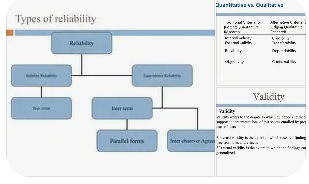
Reliability is one of the most fundamental concepts in research methodology because it determines whether a research instrument produces consistent and dependable results over time. Regardless of how well-designed a research study may be, unreliable measurements can lead to inaccurate findings, poor decision-making, and invalid conclusions. For this reason, understanding the types of reliability is essential for undergraduate students, postgraduate researchers, lecturers, dissertation writers, and professional researchers involved in quantitative research, qualitative research, mixed methods research, educational research, behavioral research, nursing research, health research, business research, accounting research, and other fields that rely on scientific inquiry.
In research methodology, reliability refers to the consistency, stability, repeatability, and reproducibility of a research instrument or measurement process. Whether researchers use a questionnaire, survey questionnaire, interview schedule, observation checklist, psychological test, rating scale, Likert scale, standardized instrument, or any other data collection instrument, the expectation is that it should yield similar results when used under similar conditions. This concept is known as measurement reliability or research reliability and forms one of the pillars of research quality.
Reliable measurements reduce measurement error and increase confidence in the collected data. When a questionnaire produces consistent responses from participants or when different observers arrive at similar conclusions while assessing the same phenomenon, researchers can trust that the instrument is dependable. On the other hand, inconsistent results often indicate weaknesses in instrument development, questionnaire development, data collection procedures, or research design.
This comprehensive guide explains the major types of reliability in research methodology, discusses how reliability is measured, introduces commonly used reliability coefficients, explains reliability analysis using statistical software such as SPSS, R, Stata, SAS, Jamovi, and JASP, compares reliability and validity, and provides practical examples from various disciplines. By the end of this guide, you will understand not only what reliability means but also how to evaluate and improve the reliability of research instruments in academic and professional research.
What Is Reliability in Research?
Reliability in research refers to the degree to which a research instrument consistently measures what it is intended to measure under similar conditions. It is often described as the consistency of measurement because a reliable instrument minimizes random error and produces stable results whenever the measurement is repeated.
In simple terms, if the same respondents answer the same questionnaire under similar circumstances, the results should remain reasonably consistent. Likewise, if two trained observers evaluate the same event using the same observation checklist, their assessments should be similar. This consistency demonstrates that the instrument has good reliability.
Research reliability is closely associated with concepts such as repeatability in research, reproducibility in research, measurement consistency, dependable measurement, score consistency, response consistency, and data consistency. These concepts collectively emphasize that research findings should not change dramatically simply because the measurement process was repeated.
Reliability does not necessarily mean that a measurement is accurate. An instrument may consistently produce the same result while measuring the wrong construct. This explains why researchers often discuss reliability alongside validity. Reliability concerns consistency, whereas validity focuses on whether the instrument actually measures the intended concept.
According to classical test theory, every observed score consists of a true score and measurement error. The goal of reliability assessment is to reduce random error so that the observed score closely reflects the respondent’s true score. This principle serves as the foundation for psychometrics, educational measurement, psychological measurement, and measurement theory.
Why Reliability Is Important in Research Methodology
Reliability is important because it strengthens the credibility and scientific rigor of research findings. Without reliable measurements, researchers cannot confidently interpret their data, test hypotheses, or make meaningful recommendations.
Some of the major reasons reliability is important include:
Ensures Consistent Results
Reliable research instruments produce stable findings whenever the same measurement process is repeated under similar conditions. This consistency allows researchers to compare findings across different studies and populations.
Reduces Measurement Error
Measurement error occurs whenever an instrument records values that differ from the true value. Errors may be systematic error or random error. While systematic error mainly affects validity, random error directly reduces reliability. Improving reliability helps minimize unnecessary variations caused by random influences.
Improves Research Credibility
Readers, reviewers, supervisors, and journal editors expect research findings to be based on dependable measurements. High instrument reliability increases confidence in the quality of the study and strengthens the credibility of the conclusions.
Supports Evidence-Based Research
Evidence-based research relies on dependable data. If measurement reliability is poor, the evidence generated from the study becomes questionable, making it difficult to formulate sound recommendations.
Enhances Questionnaire Development
Researchers invest significant effort in questionnaire development because poorly designed questions often produce inconsistent responses. Reliability testing helps identify weak items that should be revised or removed before conducting the main study.
Facilitates Instrument Development
Whether designing psychological tests, educational assessments, business surveys, or healthcare questionnaires, instrument development requires repeated reliability evaluation to ensure dependable performance.
Strengthens Statistical Analysis
Reliable data improve the quality of descriptive statistics, inferential statistics, hypothesis testing, regression analysis, and structural equation modeling because the observed relationships are less affected by measurement inconsistencies.
Characteristics of Reliable Research Instruments
Reliable research instruments possess several characteristics that distinguish them from poorly designed instruments.
Stability
A reliable instrument should produce similar results when administered repeatedly over time, provided that the measured characteristic has not changed.
Consistency
The items within the instrument should measure the same underlying construct consistently. This characteristic is particularly important when assessing internal consistency reliability.
Objectivity
Different researchers or observers using the same procedures should obtain similar results. This characteristic is essential in observational research and scorer reliability.
Precision
Reliable instruments measure variables with minimal random fluctuations, improving measurement precision and reducing uncertainty.
Repeatability
Repeated measurements under identical conditions should produce nearly identical outcomes, demonstrating strong repeatability in research.
Reproducibility
Independent researchers should be able to replicate the study using the same research instrument and obtain comparable findings, thereby supporting reproducibility in research.
What Are the Types of Reliability?
The types of reliability refer to different methods researchers use to evaluate the consistency of measurement under various research situations. Since research instruments can be administered repeatedly, scored by different observers, or contain multiple items measuring the same concept, different reliability testing methods are required.
The major types of reliability commonly discussed in research methodology include:
- Test-retest reliability
- Internal consistency reliability
- Inter-rater reliability
- Intra-rater reliability
- Split-half reliability
- Parallel forms reliability
- Equivalent forms reliability (also known as alternate forms reliability)
Each of these reliability types addresses a different aspect of measurement consistency. Selecting the appropriate method depends on the research design, data collection instrument, measurement scale, and research objectives.
Test-Retest Reliability
Definition of Test-Retest Reliability
Test-retest reliability, sometimes called stability reliability, measures the consistency of an instrument over time. It evaluates whether the same participants obtain similar scores when they complete the same research instrument on two separate occasions.
If the construct being measured has not changed, researchers expect the results from both administrations to be highly correlated. A high correlation indicates excellent research reliability.
How Test-Retest Reliability Works
The researcher administers the same questionnaire or standardized instrument to the same group of respondents. After a suitable interval often ranging from a few days to several weeks, the same instrument is administered again under similar conditions.
The scores from both administrations are then compared using a reliability coefficient, most commonly the Pearson correlation coefficient or, where appropriate, the Spearman rank correlation.
A high correlation suggests that the instrument demonstrates strong stability and dependable measurement.
Practical Example
Suppose a researcher develops a questionnaire to measure students’ attitudes toward online learning. The questionnaire is administered to 150 university students at the beginning of the semester and then administered again three weeks later.
If the Pearson correlation coefficient between the two sets of scores is 0.89, the questionnaire demonstrates high test reliability because the responses remain consistent over time.
Advantages of Test-Retest Reliability
- Measures the long-term stability of an instrument.
- Suitable for educational research, psychological measurement, and behavioral research.
- Helps verify whether responses remain consistent over time.
- Provides strong evidence of instrument reliability.
Limitations of Test-Retest Reliability
Despite its usefulness, this approach has several limitations.
Respondents may remember their previous answers, introducing memory effects that inflate the reliability coefficient. Conversely, genuine changes in attitudes, knowledge, or behavior between testing occasions may reduce the correlation even when the instrument itself is reliable. Researchers must also choose an appropriate time interval because intervals that are too short or too long can affect the results.
Statistical Measures Used
Researchers commonly evaluate test-retest reliability using:
- Pearson correlation coefficient
- Spearman rank correlation
- Intraclass Correlation Coefficient (ICC) for continuous measurements in some study designs
The Intraclass Correlation Coefficient is particularly useful when assessing the consistency of repeated quantitative measurements and is widely applied in health research, clinical studies, and educational measurement.
When Should Test-Retest Reliability Be Used?
Test-retest reliability is most appropriate when:
- The construct being measured is expected to remain stable.
- Researchers want to evaluate the consistency of a survey questionnaire over time.
- The study focuses on attitudes, abilities, personality traits, or standardized assessments that are not expected to change substantially between administrations.
Types of Reliability in Research Methodology: A Complete Guide with Examples, Importance, and Measurement
Reliability is one of the most fundamental concepts in research methodology because it determines whether a research instrument produces consistent and dependable results over time. Regardless of how well-designed a research study may be, unreliable measurements can lead to inaccurate findings, poor decision-making, and invalid conclusions. For this reason, understanding the types of reliability is essential for undergraduate students, postgraduate researchers, lecturers, dissertation writers, and professional researchers involved in quantitative research, qualitative research, mixed methods research, educational research, behavioral research, nursing research, health research, business research, accounting research, and other fields that rely on scientific inquiry.
In research methodology, reliability refers to the consistency, stability, repeatability, and reproducibility of a research instrument or measurement process. Whether researchers use a questionnaire, survey questionnaire, interview schedule, observation checklist, psychological test, rating scale, Likert scale, standardized instrument, or any other data collection instrument, the expectation is that it should yield similar results when used under similar conditions. This concept is known as measurement reliability or research reliability and forms one of the pillars of research quality.
Reliable measurements reduce measurement error and increase confidence in the collected data. When a questionnaire produces consistent responses from participants or when different observers arrive at similar conclusions while assessing the same phenomenon, researchers can trust that the instrument is dependable. On the other hand, inconsistent results often indicate weaknesses in instrument development, questionnaire development, data collection procedures, or research design.
This comprehensive guide explains the major types of reliability in research methodology, discusses how reliability is measured, introduces commonly used reliability coefficients, explains reliability analysis using statistical software such as SPSS, R, Stata, SAS, Jamovi, and JASP, compares reliability and validity, and provides practical examples from various disciplines. By the end of this guide, you will understand not only what reliability means but also how to evaluate and improve the reliability of research instruments in academic and professional research.
What Is Reliability in Research?
Reliability in research refers to the degree to which a research instrument consistently measures what it is intended to measure under similar conditions. It is often described as the consistency of measurement because a reliable instrument minimizes random error and produces stable results whenever the measurement is repeated.
In simple terms, if the same respondents answer the same questionnaire under similar circumstances, the results should remain reasonably consistent. Likewise, if two trained observers evaluate the same event using the same observation checklist, their assessments should be similar. This consistency demonstrates that the instrument has good reliability.
Research reliability is closely associated with concepts such as repeatability in research, reproducibility in research, measurement consistency, dependable measurement, score consistency, response consistency, and data consistency. These concepts collectively emphasize that research findings should not change dramatically simply because the measurement process was repeated.
Reliability does not necessarily mean that a measurement is accurate. An instrument may consistently produce the same result while measuring the wrong construct. This explains why researchers often discuss reliability alongside validity. Reliability concerns consistency, whereas validity focuses on whether the instrument actually measures the intended concept.
According to classical test theory, every observed score consists of a true score and measurement error. The goal of reliability assessment is to reduce random error so that the observed score closely reflects the respondent’s true score. This principle serves as the foundation for psychometrics, educational measurement, psychological measurement, and measurement theory.
Why Reliability Is Important in Research Methodology
Reliability is important because it strengthens the credibility and scientific rigor of research findings. Without reliable measurements, researchers cannot confidently interpret their data, test hypotheses, or make meaningful recommendations.
Some of the major reasons reliability is important include:
Ensures Consistent Results
Reliable research instruments produce stable findings whenever the same measurement process is repeated under similar conditions. This consistency allows researchers to compare findings across different studies and populations.
Reduces Measurement Error
Measurement error occurs whenever an instrument records values that differ from the true value. Errors may be systematic error or random error. While systematic error mainly affects validity, random error directly reduces reliability. Improving reliability helps minimize unnecessary variations caused by random influences.
Improves Research Credibility
Readers, reviewers, supervisors, and journal editors expect research findings to be based on dependable measurements. High instrument reliability increases confidence in the quality of the study and strengthens the credibility of the conclusions.
Supports Evidence-Based Research
Evidence-based research relies on dependable data. If measurement reliability is poor, the evidence generated from the study becomes questionable, making it difficult to formulate sound recommendations.
Enhances Questionnaire Development
Researchers invest significant effort in questionnaire development because poorly designed questions often produce inconsistent responses. Reliability testing helps identify weak items that should be revised or removed before conducting the main study.
Facilitates Instrument Development
Whether designing psychological tests, educational assessments, business surveys, or healthcare questionnaires, instrument development requires repeated reliability evaluation to ensure dependable performance.
Strengthens Statistical Analysis
Reliable data improve the quality of descriptive statistics, inferential statistics, hypothesis testing, regression analysis, and structural equation modeling because the observed relationships are less affected by measurement inconsistencies.
Characteristics of Reliable Research Instruments
Reliable research instruments possess several characteristics that distinguish them from poorly designed instruments.
Stability
A reliable instrument should produce similar results when administered repeatedly over time, provided that the measured characteristic has not changed.
Consistency
The items within the instrument should measure the same underlying construct consistently. This characteristic is particularly important when assessing internal consistency reliability.
Objectivity
Different researchers or observers using the same procedures should obtain similar results. This characteristic is essential in observational research and scorer reliability.
Precision
Reliable instruments measure variables with minimal random fluctuations, improving measurement precision and reducing uncertainty.
Repeatability
Repeated measurements under identical conditions should produce nearly identical outcomes, demonstrating strong repeatability in research.
Reproducibility
Independent researchers should be able to replicate the study using the same research instrument and obtain comparable findings, thereby supporting reproducibility in research.
What Are the Types of Reliability?
The types of reliability refer to different methods researchers use to evaluate the consistency of measurement under various research situations. Since research instruments can be administered repeatedly, scored by different observers, or contain multiple items measuring the same concept, different reliability testing methods are required.
The major types of reliability commonly discussed in research methodology include:
- Test-retest reliability
- Internal consistency reliability
- Inter-rater reliability
- Intra-rater reliability
- Split-half reliability
- Parallel forms reliability
- Equivalent forms reliability (also known as alternate forms reliability)
Each of these reliability types addresses a different aspect of measurement consistency. Selecting the appropriate method depends on the research design, data collection instrument, measurement scale, and research objectives.
Test-Retest Reliability
Definition of Test-Retest Reliability
Test-retest reliability, sometimes called stability reliability, measures the consistency of an instrument over time. It evaluates whether the same participants obtain similar scores when they complete the same research instrument on two separate occasions.
If the construct being measured has not changed, researchers expect the results from both administrations to be highly correlated. A high correlation indicates excellent research reliability.
How Test-Retest Reliability Works
The researcher administers the same questionnaire or standardized instrument to the same group of respondents. After a suitable interval—often ranging from a few days to several weeks—the same instrument is administered again under similar conditions.
The scores from both administrations are then compared using a reliability coefficient, most commonly the Pearson correlation coefficient or, where appropriate, the Spearman rank correlation.
A high correlation suggests that the instrument demonstrates strong stability and dependable measurement.
Practical Example
Suppose a researcher develops a questionnaire to measure students’ attitudes toward online learning. The questionnaire is administered to 150 university students at the beginning of the semester and then administered again three weeks later.
If the Pearson correlation coefficient between the two sets of scores is 0.89, the questionnaire demonstrates high test reliability because the responses remain consistent over time.
Advantages of Test-Retest Reliability
- Measures the long-term stability of an instrument.
- Suitable for educational research, psychological measurement, and behavioral research.
- Helps verify whether responses remain consistent over time.
- Provides strong evidence of instrument reliability.
Limitations of Test-Retest Reliability
Despite its usefulness, this approach has several limitations.
Respondents may remember their previous answers, introducing memory effects that inflate the reliability coefficient. Conversely, genuine changes in attitudes, knowledge, or behavior between testing occasions may reduce the correlation even when the instrument itself is reliable. Researchers must also choose an appropriate time interval because intervals that are too short or too long can affect the results.
Statistical Measures Used
Researchers commonly evaluate test-retest reliability using:
- Pearson correlation coefficient
- Spearman rank correlation
- Intraclass Correlation Coefficient (ICC) for continuous measurements in some study designs
The Intraclass Correlation Coefficient is particularly useful when assessing the consistency of repeated quantitative measurements and is widely applied in health research, clinical studies, and educational measurement.
When Should Test-Retest Reliability Be Used?
Test-retest reliability is most appropriate when:
- The construct being measured is expected to remain stable.
- Researchers want to evaluate the consistency of a survey questionnaire over time.
- The study focuses on attitudes, abilities, personality traits, or standardized assessments that are not expected to change substantially between administrations.
In the next part, we’ll examine internal consistency reliability, Cronbach’s Alpha, McDonald’s Omega, KR-20, KR-21, split-half reliability, inter-rater reliability, intra-rater reliability, and parallel forms reliability, along with their practical applications and statistical interpretation.
Part 2
Internal Consistency Reliability
Internal consistency reliability measures the extent to which multiple items within a research instrument assess the same underlying construct. Unlike test-retest reliability, which evaluates stability over time, internal consistency reliability focuses on the consistency of responses across all items in a questionnaire, rating scale, or psychological test during a single administration.
For example, if a questionnaire is designed to measure customer satisfaction using 15 Likert scale statements, all 15 items should collectively measure customer satisfaction rather than unrelated concepts. When respondents answer these items consistently, the instrument demonstrates good internal consistency and contributes to higher measurement reliability.
Internal consistency reliability is one of the most frequently reported forms of reliability in quantitative research because many studies rely on structured questionnaires and standardized instruments.
Cronbach’s Alpha
Cronbach’s Alpha is the most widely used reliability coefficient for evaluating internal consistency. Developed by Lee J. Cronbach, it estimates how closely related the items in a measurement scale are.
Cronbach’s Alpha values range from 0 to 1. Higher values generally indicate better internal consistency.
The commonly accepted interpretation is as follows:
| Cronbach’s Alpha | Interpretation |
|---|---|
| 0.90–1.00 | Excellent |
| 0.80–0.89 | Good |
| 0.70–0.79 | Acceptable |
| 0.60–0.69 | Questionable |
| 0.50–0.59 | Poor |
| Below 0.50 | Unacceptable |
Researchers should remember that an extremely high Alpha value, such as 0.98 or 0.99, may suggest that several questionnaire items are redundant because they ask nearly identical questions.
McDonald’s Omega
Although Cronbach’s Alpha remains the most popular reliability index, many researchers now recommend McDonald’s Omega because it often provides a more accurate estimate of internal consistency when questionnaire items contribute differently to the measured construct.
McDonald’s Omega is increasingly reported in psychometrics, educational measurement, and behavioral research because it addresses some limitations associated with Cronbach’s Alpha.
KR-20 and KR-21
The Kuder-Richardson Formula 20 (KR-20) and Kuder-Richardson Formula 21 (KR-21) are reliability coefficients specifically designed for instruments containing dichotomous responses such as Yes/No or True/False questions.
Educational researchers commonly use these statistics when evaluating examinations and achievement tests.
Split-Half Reliability
Split-half reliability evaluates the consistency of a research instrument by dividing it into two comparable halves and comparing the scores obtained from each half.
A questionnaire containing twenty items may be divided into odd-numbered and even-numbered questions. If both halves produce similar scores, the instrument demonstrates good reliability.
Because each half contains fewer items than the original instrument, researchers often adjust the reliability estimate using the Spearman-Brown prophecy formula.
Advantages of Split-Half Reliability
- Requires only one administration of the instrument.
- Saves time and resources.
- Suitable for educational tests and structured questionnaires.
- Helps identify inconsistencies among questionnaire items.
Limitations
Different methods of splitting the questionnaire may produce different reliability estimates. Consequently, researchers frequently prefer Cronbach’s Alpha because it evaluates all items simultaneously instead of relying on one specific split.
Inter-Rater Reliability
Inter-rater reliability refers to the level of agreement between two or more independent observers, assessors, or raters evaluating the same phenomenon.
This form of reliability is especially important in observational research, qualitative research involving coding, medical diagnosis, nursing research, classroom observations, and psychological assessment.
Example
Imagine that three lecturers independently assess students’ oral presentations using the same marking guide.
If all three lecturers assign similar scores to each student, the marking guide demonstrates high inter-rater reliability.
However, if one lecturer consistently awards significantly higher or lower marks than the others, the reliability of the assessment becomes questionable.
Statistical Measures
Researchers commonly evaluate inter-rater reliability using:
- Cohen’s Kappa
- Fleiss’ Kappa
- Intraclass Correlation Coefficient (ICC)
Cohen’s Kappa is appropriate when two raters evaluate categorical data.
Fleiss’ Kappa extends this approach to situations involving three or more raters.
The Intraclass Correlation Coefficient is widely used when raters assign numerical scores rather than categories.
Advantages
- Reduces observer bias.
- Improves research credibility.
- Enhances objectivity.
- Particularly useful for observational studies.
Limitations
Inter-rater reliability depends heavily on adequate observer training. Different interpretations of scoring criteria may reduce agreement among raters.
Intra-Rater Reliability
While inter-rater reliability evaluates agreement among different observers, intra-rater reliability measures the consistency of a single observer over time.
A researcher demonstrating good intra-rater reliability assigns similar ratings when evaluating the same material on different occasions.
Example
Suppose a medical researcher reviews X-ray images today and repeats the evaluation two weeks later without remembering the initial ratings.
If the ratings remain highly consistent, the researcher has demonstrated good intra-rater reliability.
Importance
Intra-rater reliability is essential whenever subjective judgment influences measurement because it ensures that one individual’s evaluations remain stable across time.
Parallel Forms Reliability
Parallel forms reliability, sometimes called equivalent forms reliability or alternate forms reliability, evaluates consistency by comparing two different versions of the same research instrument.
Both forms should measure the same construct using different but equivalent questions.
Example
A university entrance examination may have Form A and Form B.
Although the wording differs slightly, both versions should produce similar scores if they are equally difficult and measure the same knowledge.
Researchers administer both versions to the same respondents and compare the results using correlation analysis.
Advantages
- Minimizes memory effects.
- Suitable for repeated assessments.
- Useful in educational testing.
- Reduces practice effects.
Limitations
Developing two genuinely equivalent forms requires substantial time, expertise, and pilot testing.
Reliability Coefficients and Their Interpretation
Reliability coefficients indicate the degree of consistency achieved by a research instrument.
Although acceptable values may differ depending on the discipline, the following guidelines are widely used.
| Reliability Coefficient | Interpretation |
|---|---|
| 0.90–1.00 | Excellent reliability |
| 0.80–0.89 | Good reliability |
| 0.70–0.79 | Acceptable reliability |
| 0.60–0.69 | Questionable reliability |
| 0.50–0.59 | Poor reliability |
| Below 0.50 | Unacceptable reliability |
Researchers should not rely solely on the numerical value. The type of research, construct complexity, sample characteristics, and stage of instrument development should also be considered during reliability evaluation.
How Reliability Is Measured
Before collecting data for the main study, researchers usually conduct a pilot study or pilot testing to identify weaknesses in the research instrument.
Reliability assessment often involves several techniques.
Correlation Analysis
Researchers compare repeated measurements using Pearson correlation coefficient or Spearman rank correlation.
Internal Consistency Analysis
Cronbach’s Alpha, McDonald’s Omega, KR-20, and KR-21 help determine whether questionnaire items consistently measure the intended construct.
Reliability Analysis in SPSS
IBM SPSS Statistics is one of the most widely used software packages for conducting reliability analysis.
Researchers can easily calculate:
- Cronbach’s Alpha
- Item-total correlation
- Reliability statistics
- Scale reliability
- Internal consistency coefficient
SPSS also identifies questionnaire items that reduce overall reliability, enabling researchers to improve instrument quality before the main study.
Reliability Analysis in Other Software
Although SPSS remains popular, several statistical packages also support reliability analysis, including:
- R reliability analysis
- Stata reliability analysis
- SAS reliability analysis
- Jamovi reliability analysis
- JASP reliability analysis
These software applications provide researchers with reliable tools for evaluating questionnaire reliability, survey reliability, psychometric reliability, and measurement consistency.
Reliability Versus Validity
Many students mistakenly assume that reliability and validity mean the same thing. Although they are closely related, they represent different aspects of measurement quality.
| Reliability | Validity |
|---|---|
| Measures consistency | Measures accuracy |
| Focuses on repeatability | Focuses on correctness |
| Reduces random error | Reduces systematic error |
| Produces stable measurements | Produces accurate measurements |
| Can exist without validity | Requires reliability as a foundation |
An instrument may consistently measure the wrong concept. In such a case, it demonstrates good reliability but poor validity.
Researchers also evaluate several forms of validity, including:
- Content validity
- Construct validity
- Criterion validity
- Face validity
- Convergent validity
- Discriminant validity
- Predictive validity
- Concurrent validity
Both reliability and validity are essential for producing trustworthy evidence-based research.
Factors That Affect Reliability
Several factors influence the reliability of research instruments.
Poor Questionnaire Design
Ambiguous or confusing questions reduce response consistency and increase measurement error.
Inadequate Instrument Development
Insufficient planning during instrument development often leads to weak measurement scales.
Small Sample Size
Very small pilot samples may produce unstable reliability coefficients.
Respondent Fatigue
Long questionnaires may cause respondents to lose concentration, resulting in inconsistent answers.
Poor Data Collection Procedures
Inconsistent instructions, environmental distractions, and differences in survey administration can reduce measurement consistency.
Insufficient Observer Training
When observers receive inadequate training, inter-rater reliability and scorer reliability often decline.
Weak Measurement Scale
Poorly constructed rating scales and assessment tools may fail to capture the intended construct consistently.
Examples of Reliability in Different Fields of Research
Understanding the various types of reliability becomes easier when they are applied to real-world research scenarios. Whether the study focuses on education, business, psychology, healthcare, accounting, marketing, or the social sciences, researchers must ensure that their research instruments produce dependable and consistent results.
Educational Research
A lecturer develops a 30-item mathematics achievement test to evaluate students’ problem-solving skills. Before using the test for the main study, the lecturer conducts pilot testing with a group of students. Cronbach’s Alpha is calculated to determine the internal consistency reliability of the test. The result is 0.88, indicating that the instrument has good reliability and is suitable for educational measurement.
Psychology and Psychometrics
A psychologist designs a standardized instrument to measure anxiety levels among university students. Since anxiety is measured using multiple Likert scale items, internal consistency reliability is assessed using McDonald’s Omega and Cronbach’s Alpha. To determine whether the instrument remains stable over time, test-retest reliability is also conducted after four weeks.
This combination of reliability testing provides stronger evidence that the psychological test is dependable.
Healthcare and Nursing Research
A nursing researcher develops an observation checklist for evaluating patients’ pain management practices. Several nurses independently observe the same patients and record their findings. Cohen’s Kappa and the Intraclass Correlation Coefficient (ICC) are used to assess inter-rater reliability. High agreement among the nurses indicates that the checklist provides consistent measurements.
Business and Marketing Research
A marketing researcher designs a survey questionnaire to measure customer satisfaction with online shopping services. After conducting a pilot study, reliability analysis in SPSS reveals a Cronbach’s Alpha of 0.91. The researcher also reviews the item-total correlation values and removes one poorly performing question to improve the overall scale reliability.
Accounting Research
An accounting researcher investigates internal control effectiveness among manufacturing firms using a structured questionnaire. Reliability evaluation confirms that the instrument consistently measures the intended constructs, thereby increasing confidence in the statistical analysis and hypothesis testing.
Social Science Research
Researchers studying employee motivation administer equivalent forms reliability by creating two versions of the same questionnaire. The responses show a strong positive Pearson correlation coefficient, confirming that both versions measure the same construct consistently.
These examples illustrate that although research topics differ, the objective remains the same: to produce consistent, reproducible, and dependable measurements that strengthen research quality.
How to Report Reliability in a Research Project or Dissertation
Conducting reliability testing is only part of the research process. Researchers must also report their findings clearly in dissertations, theses, journal articles, and project reports.
A typical reliability report should include the following information:
Description of the Research Instrument
Briefly explain the questionnaire, assessment tool, observation checklist, or standardized instrument used in the study.
Type of Reliability Used
State the specific reliability method employed, such as:
- Test-retest reliability
- Internal consistency reliability
- Split-half reliability
- Inter-rater reliability
- Intra-rater reliability
- Parallel forms reliability
Reliability Coefficient
Report the appropriate reliability coefficient, including Cronbach’s Alpha, McDonald’s Omega, KR-20, KR-21, Cohen’s Kappa, Fleiss’ Kappa, Pearson correlation coefficient, Spearman rank correlation, or Intraclass Correlation Coefficient, depending on the research design.
Interpretation of the Result
Interpret the coefficient using accepted benchmarks and explain whether the instrument demonstrates acceptable reliability.
Example of Reporting Reliability
A concise example is:
“The questionnaire was subjected to reliability testing through a pilot study involving 40 respondents. Internal consistency reliability was assessed using Cronbach’s Alpha in IBM SPSS Statistics. The instrument produced a Cronbach’s Alpha coefficient of 0.86, indicating good internal consistency and confirming that the questionnaire was reliable for the main study.”
Including this level of detail enhances transparency and demonstrates methodological rigor.
How to Improve Reliability in Research
Even well-designed instruments may require refinement. Researchers can improve reliability by following established best practices.
Conduct a Pilot Study
Pilot studies help identify ambiguous questions, poorly performing items, and weaknesses in questionnaire design before the main data collection begins.
Improve Questionnaire Development
Questions should be clear, concise, and directly related to the construct being measured. Avoid double-barreled questions, leading questions, and vague wording.
Standardize Data Collection Procedures
Provide identical instructions to all participants, maintain similar testing environments, and ensure that every respondent completes the instrument under comparable conditions.
Train Observers
For observational research, proper training improves both inter-rater reliability and intra-rater reliability by reducing inconsistencies in scoring.
Review Item-Total Correlation
Item-total correlation helps identify questionnaire items that weaken internal consistency. Removing or revising such items often improves reliability statistics.
Select Appropriate Measurement Scales
Well-designed measurement scales and assessment tools contribute to better measurement precision and response consistency.
Increase Sample Size
A larger pilot sample often produces more stable and representative reliability coefficients than a very small sample.
Minimize Measurement Error
Researchers should reduce distractions, clarify instructions, maintain standardized testing conditions, and carefully monitor data collection to minimize random error.
Common Mistakes Researchers Make When Assessing Reliability
Many students and novice researchers misunderstand or misuse reliability testing. Avoiding these common mistakes can significantly improve research quality.
Confusing Reliability with Validity
One of the most common misconceptions is assuming that a reliable instrument is automatically valid. Reliability refers to consistency, while validity concerns whether the instrument measures the intended construct accurately.
Ignoring Pilot Testing
Skipping pilot testing increases the likelihood of using unreliable research instruments in the main study.
Choosing the Wrong Reliability Test
Different research situations require different reliability measures. For example, Cronbach’s Alpha is suitable for internal consistency, whereas Cohen’s Kappa is appropriate for categorical ratings by two observers.
Relying Solely on Cronbach’s Alpha
Although Cronbach’s Alpha is widely accepted, researchers should also consider McDonald’s Omega, KR-20, KR-21, ICC, and other appropriate statistics when justified by the study design.
Using Very Small Samples
Small pilot samples may produce unstable reliability coefficients that do not accurately represent the instrument’s true performance.
Retaining Weak Questionnaire Items
Researchers sometimes keep poorly performing questions simply because they appear important. Reliability analysis should guide decisions about whether items should be revised or removed.
Failing to Explain Reliability Results
Reporting a reliability coefficient without interpreting its meaning leaves readers uncertain about the quality of the instrument.
Decision Guide: Which Type of Reliability Should You Use?
Selecting the appropriate reliability method depends on the purpose of the study and the nature of the research instrument.
| Research Situation | Recommended Reliability Type |
|---|---|
| Measuring consistency over time | Test-retest reliability |
| Evaluating questionnaire consistency | Internal consistency reliability |
| Comparing two equivalent examinations | Parallel forms reliability |
| Comparing two halves of one instrument | Split-half reliability |
| Multiple observers rating the same event | Inter-rater reliability |
| One observer rating repeatedly | Intra-rater reliability |
| True/False or Yes/No items | KR-20 or KR-21 |
| Multi-item Likert scale | Cronbach’s Alpha or McDonald’s Omega |
This simple framework helps researchers choose the most appropriate reliability assessment technique based on their study design and measurement objectives.
Frequently Asked Questions
What are the main types of reliability in research methodology?
The major types of reliability include test-retest reliability, internal consistency reliability, split-half reliability, inter-rater reliability, intra-rater reliability, and parallel forms reliability. Each evaluates consistency from a different perspective and is selected according to the research design and type of measurement.
What is the difference between reliability and validity?
Reliability refers to the consistency of measurement, while validity refers to the accuracy of measurement. An instrument can be reliable without being valid, but a valid instrument must first demonstrate acceptable reliability.
What is an acceptable reliability coefficient?
In most research fields, a reliability coefficient of 0.70 or higher is considered acceptable. However, studies involving high-stakes testing or clinical decision-making may require higher values.
Why is Cronbach’s Alpha important?
Cronbach’s Alpha evaluates the internal consistency of questionnaire items and helps researchers determine whether multiple items measure the same construct consistently.
When should a pilot study be conducted?
A pilot study should be completed before the main data collection begins. It helps identify weaknesses in the research instrument and provides an opportunity to assess reliability and validity.
Which software can be used for reliability analysis?
Researchers commonly perform reliability analysis using IBM SPSS Statistics, R, Stata, SAS, Jamovi, and JASP. These software packages provide tools for calculating reliability coefficients and evaluating measurement consistency.
Can qualitative research have reliability?
Yes. Although qualitative research often uses different terminology, consistency in coding, observer agreement, audit trails, and standardized procedures contribute to dependable findings. Inter-rater reliability may also be assessed in qualitative coding when multiple researchers analyze the same data.
How can researchers improve the reliability of a questionnaire?
Researchers can improve questionnaire reliability by conducting pilot testing, revising unclear questions, removing weak items based on item-total correlation, standardizing data collection procedures, training observers where necessary, and selecting appropriate measurement scales.
Conclusion
Understanding the types of reliability is essential for producing credible, consistent, and scientifically sound research. Whether you are conducting quantitative research, qualitative research, mixed methods research, educational research, health research, business research, or social science research, evaluating the reliability of your research instrument should never be overlooked.
Reliable instruments produce consistent results, reduce measurement error, strengthen evidence-based research, and increase confidence in research findings. Methods such as test-retest reliability, internal consistency reliability, split-half reliability, inter-rater reliability, intra-rater reliability, and parallel forms reliability each provide valuable insights into different aspects of measurement consistency. Researchers should select the most appropriate method based on their research design, measurement scale, and study objectives.
Modern reliability assessment extends beyond Cronbach’s Alpha to include McDonald’s Omega, KR-20, KR-21, Pearson correlation coefficient, Spearman rank correlation, Cohen’s Kappa, Fleiss’ Kappa, and the Intraclass Correlation Coefficient, allowing researchers to evaluate a wide variety of research instruments accurately. Combined with careful questionnaire development, instrument validation, pilot testing, standardized data collection, and thoughtful reliability analysis, these techniques contribute to dependable measurement and stronger research outcomes.
Ultimately, reliability is not just a statistical requirement, it is a cornerstone of high-quality research methodology. By understanding how reliability works, choosing the correct reliability test, interpreting reliability statistics appropriately, and continually improving research instruments, researchers can generate trustworthy findings that support sound academic conclusions, professional practice, and future scientific advancement.
Be the first to comment