Research is the foundation of knowledge creation. Whether in education, healthcare, business, psychology, sociology, or technology, every meaningful discovery begins with a well-planned research design. Among the various approaches available, qualitative research design stands out as one of the most effective methods for exploring complex social phenomena, understanding human behavior, and uncovering the meanings people attach to their experiences.
Unlike quantitative research, which focuses on numerical data and statistical relationships, qualitative research seeks to answer questions that cannot be measured solely through numbers. Instead, it examines people’s perspectives, emotions, beliefs, motivations, cultures, and interactions within their natural environments. This emphasis on depth rather than breadth allows researchers to generate rich, detailed insights that often reveal aspects of a phenomenon that structured surveys or experiments may overlook.
Imagine a school administrator who wants to understand why students lose interest in online learning despite having access to modern educational technologies. A quantitative study might reveal that 65% of students are dissatisfied with virtual classes. While this statistic is valuable, it does not explain why they feel dissatisfied. A qualitative researcher would conduct interviews, facilitate discussions with research participants, observe classroom interactions, and analyze personal experiences to uncover the underlying reasons behind those responses. The resulting qualitative research findings provide context, meaning, and practical recommendations that numerical data alone cannot offer.
This ability to explore human experience makes qualitative inquiry indispensable across many disciplines. In educational research, it helps educators understand how students learn, how teachers adapt instructional strategies, and how institutional environments influence academic success. In healthcare, it explores patients’ lived experiences with illnesses or treatments. In business and user research, organizations use qualitative methods to understand customer behavior, improve products, and enhance user satisfaction. Policymakers, social workers, and nonprofit organizations also rely on qualitative evidence to design interventions that reflect the realities of the communities they serve.
Another distinguishing feature of qualitative research is its flexibility. Rather than following rigid procedures from beginning to end, the research process can evolve as new information emerges. Researchers may refine a research question, adjust interview prompts, or explore unexpected themes that arise during fieldwork. This adaptability enables qualitative studies to capture the complexity of real-world situations while remaining responsive to participants’ perspectives.
However, conducting a high-quality qualitative study requires much more than simply interviewing people. Researchers must carefully select an appropriate study design, choose suitable qualitative research methods, collect trustworthy qualitative data, apply rigorous data analysis techniques, and ensure that interpretations accurately represent participants’ experiences. Choosing the right design is therefore one of the most important decisions in any research project, as it determines how data will be collected, interpreted, and presented.
This comprehensive guide explains everything you need to know about qualitative research design. You will learn what it means, why it matters, its defining characteristics, the major types of qualitative research designs, common qualitative research methods, approaches to qualitative data analysis, practical examples, strengths, limitations, and how it compares with quantitative research. Whether you are an undergraduate completing an assignment, a postgraduate preparing a dissertation, or a professional seeking a deeper understanding of qualitative methodology, this guide will provide the knowledge and confidence needed to select and apply the most appropriate research approach.
What Is Qualitative Research Design?
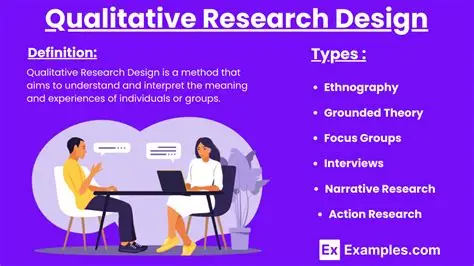
Qualitative research design is a systematic framework that guides researchers in exploring, understanding, and interpreting people’s experiences, behaviors, perceptions, and social interactions within their natural contexts. Rather than measuring variables numerically, it emphasizes collecting rich, descriptive information that explains how and why particular phenomena occur.
At its core, qualitative research is concerned with meaning. It seeks to answer questions such as:
- How do people experience a particular event?
- Why do individuals make certain decisions?
- What meanings do participants attach to their experiences?
- How do cultural or social contexts influence behavior?
- What factors shape people’s perceptions of a phenomenon?
Unlike experimental or statistical approaches, a qualitative research design does not begin with a hypothesis that must be tested through numerical evidence. Instead, it often starts with broad qualitative research questions that evolve as the researcher gains a deeper understanding of the topic. This inductive approach allows theories and explanations to emerge from the data rather than being imposed beforehand.
For example, consider a researcher investigating why first-year university students struggle to adapt to campus life. Instead of distributing a structured questionnaire with fixed response options, the researcher might conduct in-depth interviews, observe student interactions, review personal journals, and analyze reflective essays. These multiple sources of qualitative data help reveal emotional, academic, financial, and social challenges that contribute to students’ experiences. Such an approach provides nuanced insight into issues that may remain hidden in numerical surveys.
A strong qualitative design also defines the overall strategy for conducting the study. It specifies:
- The central research question or problem.
- The appropriate qualitative research methods to use.
- How research participants will be selected.
- The setting in which the study will take place.
- The techniques for collecting and organizing data.
- The approach to qualitative analysis and interpretation.
- Measures for ensuring credibility and trustworthiness.
Because qualitative studies focus on understanding context, researchers often work directly within participants’ natural environments. This may involve classrooms, workplaces, hospitals, communities, or online spaces where behaviors and interactions occur naturally. Such immersion enables the researcher to observe situations as they unfold rather than relying solely on participants’ recollections.
One of the defining strengths of qualitative methodology is its ability to accommodate multiple forms of evidence. Depending on the qualitative research approach, data may be gathered through interviews, focus group discussions, participant observation, documents, photographs, videos, field notes, or digital communications. Each source contributes to a more comprehensive understanding of the phenomenon under investigation.
It is also important to distinguish between qualitative research design and qualitative research methods. Although the terms are sometimes used interchangeably, they refer to different aspects of a study. The research design represents the overall blueprint or strategy that guides the investigation, while the methods are the specific tools and procedures used to collect and analyze information. For instance, a researcher may adopt a case study design as the overarching framework while using interviews, observations, and document analysis as complementary methods for gathering evidence.
Ultimately, the goal of qualitative research is not to produce universally generalizable conclusions but to develop a deep, contextual understanding of people’s experiences and the social realities they inhabit. This makes qualitative inquiry particularly valuable when exploring new or poorly understood issues, examining cultural practices, investigating organizational behavior, or studying the complexities of human interaction.
In the next section, we will examine why qualitative research design is important, highlighting the unique value it brings to academic research, professional practice, and evidence-based decision-making across different fields.
Why Is Qualitative Research Design Important?
A well-planned qualitative research design does more than provide a roadmap for a study, it enables researchers to uncover the stories, perspectives, and meanings behind human behavior. While numbers can reveal what is happening, qualitative research helps explain why it is happening, how it happens, and what it means to the people involved. This makes qualitative inquiry one of the most valuable approaches in modern research, particularly when the objective is to understand complex social, educational, cultural, or organizational issues.
As the world becomes increasingly interconnected and diverse, researchers are often confronted with questions that cannot be answered through statistics alone. People’s beliefs, emotions, relationships, motivations, and cultural backgrounds influence how they experience events and make decisions. A thoughtfully designed qualitative study provides the flexibility needed to explore these realities in depth.
Below are some of the key reasons why qualitative research design remains indispensable across various disciplines.
1. It Provides a Deeper Understanding of Human Experiences
One of the greatest strengths of qualitative research is its ability to explore human experience in all its complexity. Rather than reducing individuals to numerical variables, it seeks to understand their thoughts, feelings, values, and interpretations of the world around them.
For example, if a hospital wants to improve patient care, measuring satisfaction scores can indicate whether patients are generally satisfied or dissatisfied. However, interviews with patients may reveal that compassionate communication from healthcare professionals matters more than waiting times. Such findings provide richer insights that can inform meaningful improvements.
Similarly, in educational research, qualitative studies help educators understand how students perceive classroom instruction, assessment methods, or learning environments. These insights often lead to more effective teaching strategies and policies.
2. It Explores the “Why” Behind the Data
Quantitative studies are excellent for identifying patterns, trends, and statistical relationships. However, they rarely explain the underlying reasons behind those patterns.
Consider a company that notices a decline in employee productivity. A quantitative analysis may identify reduced output over a six-month period, but it cannot fully explain the causes. A qualitative investigation involving interviews, workplace observations, and discussions with employees may uncover issues such as poor leadership, limited career development opportunities, or declining workplace morale.
This ability to explain the reasons behind observable outcomes is one of the defining advantages of qualitative inquiry.
3. It Supports the Development of New Theories
Unlike many quantitative studies that begin by testing existing theories, qualitative research often generates new ideas and conceptual frameworks. Researchers examine participants’ experiences, identify recurring patterns, and develop explanations grounded in the collected evidence.
For instance, during a study exploring students’ adaptation to online learning, unexpected themes such as digital fatigue, peer isolation, or limited family support may emerge. These observations can contribute to the development of new theoretical perspectives or educational models.
This inductive nature makes qualitative research especially valuable when studying emerging phenomena or topics with limited prior research.
4. It Captures Context and Meaning
Human behavior cannot always be separated from the environment in which it occurs. Social relationships, cultural norms, institutional structures, and historical circumstances all shape how individuals think and act.
A robust research design acknowledges this reality by encouraging researchers to study participants within their natural settings whenever possible. Whether investigating classroom interactions, community development initiatives, workplace cultures, or healthcare practices, understanding context helps researchers interpret findings more accurately.
Without context, research findings may oversimplify complex issues or fail to reflect the realities experienced by participants.
5. It Gives Participants a Voice
One of the defining principles of qualitative inquiry is its commitment to representing participants’ perspectives authentically. Rather than speaking for individuals, researchers encourage participants to share their own stories, opinions, and lived experiences.
This participant-centered approach is particularly important when studying marginalized communities, vulnerable populations, or groups whose voices have historically been underrepresented in research.
By emphasizing dialogue, empathy, and careful interpretation, qualitative studies contribute to more inclusive and socially responsible research practices.
6. It Informs Better Decision-Making
Organizations frequently use qualitative evidence to improve policies, services, and strategic planning.
Examples include:
- Schools exploring factors affecting student engagement.
- Businesses conduct user research to improve products and customer experiences.
- Government agencies evaluating public service delivery.
- Healthcare institutions understand patient experiences.
- Non-profit organizations assessing community needs.
Because qualitative findings provide rich explanations rather than simple measurements, they often lead to more practical and human-centered decisions.
7. It Complements Quantitative Research
Qualitative and quantitative approaches should not be viewed as competing methods. Instead, they often complement one another.
Researchers may begin with qualitative interviews to understand an issue before conducting a large-scale survey. Conversely, unexpected statistical findings from a quantitative study may prompt a follow-up qualitative investigation to explain the results.
This complementary relationship strengthens the overall research process and provides a more complete understanding of complex problems.
Key Characteristics of Qualitative Research Design
Understanding the defining characteristics of qualitative research design helps researchers determine when it is the most appropriate approach for their studies. Although different qualitative research designs have unique features, they share several common principles that distinguish them from quantitative approaches.
1. Naturalistic Inquiry
Qualitative research is typically conducted in natural settings where participants live, work, learn, or interact.
Rather than creating artificial laboratory conditions, researchers observe real-life situations as they occur. This naturalistic approach increases the authenticity of the findings and allows researchers to understand behavior within its actual context.
For example, a researcher studying classroom participation may observe lessons directly instead of asking students to complete hypothetical questionnaires.
2. Focus on Meaning Rather Than Measurement
Qualitative studies prioritize understanding people’s experiences rather than calculating numerical relationships.
Instead of asking, “How many students are satisfied?” researchers ask questions such as:
- Why are students satisfied?
- How do they define effective teaching?
- What experiences influenced their opinions?
This emphasis on meaning enables researchers to develop a richer understanding of complex issues.
3. Flexible Research Process
Unlike rigid experimental designs, qualitative studies remain flexible throughout the investigation.
As new information emerges, researchers may:
- Refine interview questions.
- Explore unexpected themes.
- Adjust sampling strategies.
- Conduct additional interviews.
- Return to participants for clarification.
This flexibility allows researchers to respond to evolving evidence while maintaining the integrity of the study.
4. Use of Multiple Data Collection Methods
High-quality qualitative studies rarely rely on a single source of information.
Common qualitative research methods include:
- In-depth interviews
- Focus group discussions
- Participant observation
- Document analysis
- Diaries and journals
- Audio and video recordings
- Field notes
Combining multiple sources enhances the credibility and richness of the findings through triangulation.
5. Purposeful Selection of Participants
Qualitative research generally uses purposive rather than random sampling.
Instead of selecting participants solely to achieve statistical representation, researchers intentionally choose individuals who possess relevant experiences or knowledge related to the research question.
For example, a study examining teachers’ experiences with inclusive education would recruit educators directly involved in inclusive classrooms rather than randomly selecting individuals from unrelated professions.
6. Rich and Descriptive Data
The primary goal is to produce detailed descriptions that accurately reflect participants’ perspectives.
Data often consist of:
- Interview transcripts.
- Observation notes.
- Personal narratives.
- Documents.
- Photographs.
- Audio recordings.
Such rich evidence enables researchers to identify subtle patterns and relationships that numerical data may overlook.
7. Inductive Analysis
Qualitative studies typically follow an inductive approach.
Rather than imposing predetermined categories, researchers examine the collected data carefully, identify recurring ideas, group similar concepts, and develop themes based on participants’ accounts.
This process ensures that interpretations remain grounded in the evidence rather than shaped solely by prior assumptions.
8. Researcher as the Primary Instrument
In qualitative inquiry, the researcher plays an active role in collecting, interpreting, and analyzing information.
This requires strong interviewing skills, careful observation, ethical awareness, and continuous reflexivity. Researchers must remain conscious of how their own beliefs, experiences, and assumptions may influence data interpretation.
Maintaining detailed field notes and reflective journals helps enhance transparency throughout the study.
9. Emphasis on Credibility and Trustworthiness
Instead of relying solely on statistical measures of validity and reliability, qualitative researchers evaluate the quality of their work using criteria such as:
- Credibility: Do the findings accurately represent participants’ perspectives?
- Transferability: Can readers determine whether the findings apply to similar contexts?
- Dependability: Is the research process logical, consistent, and well documented?
- Confirmability: Are the findings supported by evidence rather than researcher bias?
These principles strengthen the trustworthiness of qualitative research findings.
10. Context-Specific Findings
Qualitative research does not seek universal laws that apply to every situation. Instead, it aims to provide a detailed understanding of a specific phenomenon within a particular context.
Although findings may not always be statistically generalizable, they often offer valuable theoretical, practical, and contextual insights that can inform future research, policy development, and professional practice.
Types of Qualitative Research Design
Selecting the appropriate qualitative research design is one of the most critical decisions in any research project. The design determines how the researcher approaches the study, the type of qualitative data collected, the methods used for analysis, and ultimately the quality and credibility of the findings.
There is no universally “best” qualitative design. Instead, the choice depends on the research question, the objectives of the study, the participants involved, and the nature of the phenomenon being explored. Each design offers a unique perspective for understanding human experiences and social realities.
Below are the six major qualitative research designs widely used across disciplines such as education, healthcare, sociology, psychology, business, and public policy.
1. Phenomenological Research Design
Phenomenology is a qualitative approach that seeks to understand the lived experience of individuals who have encountered a particular phenomenon. Instead of focusing on external events, it explores how people perceive, interpret, and make meaning of their personal experiences.
The central assumption of phenomenology is that reality is shaped by human consciousness and experience. Therefore, researchers aim to describe the essence of a shared experience from the participants’ perspectives.
Purpose
The primary objective is to answer questions such as:
- What was the experience like?
- How did participants interpret that experience?
- What common meanings emerged from their accounts?
Common Data Collection Methods
A phenomenological study often relies on:
- In-depth interviews
- Reflective journals
- Personal narratives
- Audio-recorded conversations
Because participants are encouraged to speak freely, researchers obtain rich descriptions that reveal emotions, beliefs, and perceptions.
Example
A postgraduate student may investigate the experiences of first-generation university students adjusting to campus life. Through interviews, the researcher explores themes such as belonging, academic pressure, family expectations, and resilience.
Advantages
- Provides deep insight into personal experiences.
- Captures emotions and perspectives in detail.
- Suitable for health, education, and psychology research.
Limitations
- Findings are often based on small participant groups.
- Analysis requires significant time and interpretive skill.
- Results may not be broadly generalizable.
2. Case Study Research Design
A case study is one of the most widely used qualitative research designs. It involves an in-depth investigation of a single case or a small number of cases within its real-life context.
A case may include:
- An individual
- A school
- A company
- A community
- An organization
- A government program
- A specific event
The aim is not to study many cases superficially but to examine one case comprehensively.
Purpose
Case studies seek to answer questions such as:
- How does this organization operate?
- Why did this intervention succeed?
- What factors influenced the outcome?
Data Collection Methods
Researchers often combine multiple sources of evidence, including:
- Interviews
- Documents
- Reports
- Observations
- Photographs
- Institutional records
Using multiple evidence sources strengthens the credibility of the case study design.
Example
A researcher may examine how a rural secondary school significantly improved students’ academic performance despite limited funding. Interviews with teachers, administrators, students, and parents, alongside school records and classroom observations, provide a comprehensive understanding of the school’s success.
Advantages
- Offers detailed contextual understanding.
- Combines multiple data sources.
- Generates practical recommendations.
Limitations
- Time-intensive.
- Requires careful management of large volumes of data.
- Findings may be difficult to generalize beyond the specific case.
3. Grounded Theory Research Design
Grounded Theory aims to develop a theory directly from collected data rather than testing an existing one.
Instead of beginning with predetermined assumptions, the researcher allows explanations to emerge through continuous comparison of participants’ responses.
Purpose
Grounded Theory seeks to answer:
- How do people respond to a particular situation?
- What social processes explain observed behavior?
- What theory best explains participants’ actions?
Research Process
Typically, researchers:
- Collect data.
- Conduct initial coding.
- Compare emerging categories.
- Gather additional data to refine concepts.
- Develop a theoretical explanation grounded in the evidence.
This iterative approach distinguishes Grounded Theory from many other qualitative approaches.
Example
A researcher studying how newly appointed school principals adapt to leadership roles may discover recurring themes related to mentorship, institutional culture, and professional confidence. These patterns can form the basis of a new theory explaining leadership adaptation.
Advantages
- Generates original theories.
- Highly systematic.
- Suitable for exploring under-researched topics.
Limitations
- Requires advanced analytical skills.
- Coding can be lengthy and complex.
- Demands continuous interaction between data collection and analysis.
4. Narrative Research Design
Narrative research focuses on the stories people tell about their lives. Rather than fragmenting experiences into categories, it examines how individuals construct meaning through personal narratives.
Every person’s story reflects their beliefs, culture, identity, and experiences. Narrative researchers seek to understand these stories while preserving their sequence and context.
Purpose
This design answers questions such as:
- How do individuals describe important life events?
- How do personal stories shape identity?
- What meanings do participants attach to their experiences?
Data Collection Methods
Narrative studies often involve:
- Life-history interviews
- Autobiographies
- Diaries
- Letters
- Oral histories
- Recorded conversations
Narrative Analysis
Researchers use narrative analysis to identify patterns, turning points, relationships, and meanings within participants’ stories.
Example
A study exploring the journeys of successful entrepreneurs from disadvantaged backgrounds may examine how childhood experiences, education, failure, and resilience shaped their career paths.
Advantages
- Produces compelling, human-centered findings.
- Preserves participants’ voices.
- Offers rich contextual understanding.
Limitations
- Stories may be influenced by memory or personal bias.
- Interpretation requires careful ethical consideration.
- Analysis can be subjective if not conducted systematically.
5. Ethnographic Research Design
Ethnography examines the culture, beliefs, practices, and behaviors of a particular group over an extended period.
Rather than conducting brief interviews alone, ethnographers often immerse themselves in participants’ daily lives to understand how culture influences behavior.
Purpose
Ethnography seeks to answer questions such as:
- How does this community function?
- What cultural practices shape behavior?
- How do members interpret their social world?
Data Collection Methods
Common methods include:
- Long-term participant observation
- Informal conversations
- Interviews
- Field notes
- Community documents
- Photographs
Because researchers spend considerable time in the field, ethnographic studies provide exceptionally rich contextual data.
Example
An educational researcher studying classroom culture in a multilingual primary school may spend several months observing lessons, attending school activities, and interacting with teachers, students, and parents.
Advantages
- Captures authentic social interactions.
- Reveals cultural influences often overlooked by surveys.
- Produces highly detailed descriptions.
Limitations
- Extremely time-consuming.
- Requires prolonged engagement.
- Researchers must carefully manage ethical considerations and personal bias.
6. Action Research Design
Action research is a practical, problem-solving approach conducted to improve specific situations.
Unlike many research designs that focus primarily on generating knowledge, action research aims to produce immediate improvements while simultaneously contributing to understanding.
Purpose
Action research addresses questions such as:
- How can this problem be solved?
- Which intervention works best?
- How can existing practices be improved?
Research Cycle
Action research generally follows a continuous cycle:
- Identify a problem.
- Plan an intervention.
- Implement the intervention.
- Observe results.
- Reflect on outcomes.
- Refine and repeat the process if necessary.
This cyclical approach promotes continuous learning and improvement.
Example
A secondary school teacher notices declining student participation during science lessons. The teacher introduces collaborative learning strategies, evaluates student engagement over several weeks, reflects on the results, and modifies teaching methods based on the findings.
Advantages
- Produces immediate practical benefits.
- Encourages collaboration.
- Supports continuous professional development.
- Particularly valuable in educational research and organizational improvement.
Limitations
- Findings are often context-specific.
- Researcher involvement may introduce bias.
- Results may not be easily generalized.
Comparison of Major Qualitative Research Designs
| Research Design | Primary Focus | Typical Data Collection | Best Used When |
|---|---|---|---|
| Phenomenology | Understanding shared lived experiences | In-depth interviews, journals | Exploring how people experience a particular phenomenon |
| Case Study | Investigating a bounded case in depth | Interviews, observations, documents, records | Examining a person, organization, event, or institution comprehensively |
| Grounded Theory | Developing a theory from data | Interviews, observations, iterative coding | Explaining social processes or generating new theoretical insights |
| Narrative Research | Understanding stories and life histories | Life-history interviews, diaries, autobiographies | Exploring personal journeys, identities, and experiences |
| Ethnography | Studying culture and group behavior | Participant observation, field notes, interviews | Understanding communities, organizations, or cultural groups in their natural settings |
| Action Research | Solving practical problems while improving practice | Observation, interviews, reflective journals, collaborative discussions | Improving teaching, workplace processes, healthcare practices, or community programs |
Choosing the Right Qualitative Research Design
Choosing the most appropriate study design requires careful consideration of your research objectives rather than personal preference. Ask yourself the following questions:
- Do you want to understand people’s lived experiences?
Choose Phenomenology. - Are you investigating one individual, organization, or event in depth?
Choose a Case Study. - Do you want to develop a new theory from participants’ experiences?
Choose Grounded Theory. - Are personal stories or life journeys central to your research?
Choose Narrative Research. - Are you exploring the culture or practices of a particular community or organization?
Choose Ethnography. - Are you trying to improve an existing practice while conducting research?
Choose Action Research.
Remember that the most effective qualitative research begins with a clear research question. Once the purpose of the study is well defined, selecting the appropriate design becomes much more straightforward. A well-matched design enhances the credibility of the study, supports rigorous qualitative analysis, and increases the value of the qualitative research findings for both academic and practical applications.
Qualitative Research Methods
A carefully selected qualitative research design provides the overall framework for a study, but it is the qualitative research methods that enable researchers to collect meaningful evidence and answer their research question. While the terms research design and research method are often used interchangeably, they serve different purposes. The design outlines the overall strategy, whereas the methods are the practical techniques used to gather and interpret qualitative data.
Choosing the right method depends on several factors, including the research objectives, the type of participants, the setting, and the nature of the phenomenon being explored. An experienced qualitative researcher rarely depends on a single method. Instead, multiple methods are often combined to build a comprehensive understanding of the issue under investigation. This approach, known as methodological triangulation, strengthens the credibility and trustworthiness of the findings.
For example, a researcher investigating the effectiveness of digital learning in universities may conduct interviews with lecturers, organize focus group discussions with students, observe virtual classrooms, and review institutional documents. Each method contributes a different perspective, creating a richer and more reliable picture of the phenomenon than any single source could provide.
Below are the most widely used qualitative research methods and their applications.
1. In-Depth Interviews
The interview remains one of the most important tools in qualitative research because it allows participants to explain their thoughts, feelings, experiences, and opinions in their own words. Rather than limiting responses to predefined options, interviews encourage detailed conversations that often reveal unexpected insights.
Most qualitative interviews use open-ended questions, allowing participants to expand on issues that matter most to them. Although some studies employ a structured interview, qualitative researchers more commonly use semi-structured or unstructured formats to encourage flexibility while ensuring that the discussion remains relevant to the study’s objectives.
Advantages
- Produces detailed and rich information.
- Encourages participants to share personal experiences.
- Allows researchers to clarify ambiguous responses.
- Generates valuable evidence for qualitative data analysis.
Example
A researcher examining the experiences of newly employed teachers might interview participants about classroom management, workload, professional development, and institutional support. Follow-up questions help explore themes that emerge naturally during the conversation.
2. Focus Group Discussions
Focus groups involve guided discussions among a small group of participants who share similar backgrounds or experiences. Instead of collecting individual perspectives alone, this method captures interactions between participants, revealing how opinions develop through conversation.
A skilled moderator encourages participation, manages group dynamics, and ensures that every participant has an opportunity to contribute.
Advantages
- Generates diverse perspectives within a single session.
- Reveals areas of agreement and disagreement.
- Encourages participants to build upon one another’s ideas.
- Efficient for exploring public perceptions or community issues.
Example
An education researcher studying students’ perceptions of online assessment may organize separate focus groups for first-year and final-year students to compare their experiences and expectations.
3. Observation
Observation enables researchers to study behavior directly rather than relying entirely on participants’ descriptions. It is particularly valuable when individuals may struggle to explain their actions or when natural interactions provide richer evidence than interviews alone.
Observation may be:
- Non-participant observation
- Participant observation
- Structured observation
- Unstructured observation
In participant observation, researchers immerse themselves in the setting while observing everyday activities. This approach is especially common in ethnographic studies.
Advantages
- Captures authentic behavior.
- Reduces reliance on self-reported information.
- Provides contextual evidence.
- Supports deeper interpretation during analysis.
Example
A researcher investigating collaborative learning may observe classroom discussions over an academic semester, documenting communication patterns, leadership roles, and student participation.
4. Document Analysis
Documents often provide valuable evidence that complements interviews and observations. Researchers examine written or digital materials to understand policies, historical developments, organizational practices, or personal experiences.
Examples include:
- School records
- Meeting minutes
- Government policies
- Diaries
- Newspapers
- Official reports
- Institutional guidelines
- Online discussion forums
Document analysis is especially useful when studying organizational change or educational policy.
5. Audio-Visual Materials
Modern qualitative research increasingly incorporates multimedia evidence.
Researchers may analyze:
- Videos
- Photographs
- Podcasts
- Social media posts
- Recorded presentations
- Digital storytelling projects
These materials provide additional context that may not emerge through interviews alone.
Data Collection Techniques in Qualitative Research
Collecting high-quality qualitative data requires more than selecting an appropriate method. Researchers must also ensure that information is gathered systematically, ethically, and consistently throughout the research process.
The richness of qualitative findings depends largely on how effectively researchers interact with participants, record observations, and organize evidence.
Building Rapport
Trust is fundamental in qualitative inquiry. Participants are more likely to provide honest, detailed responses when they feel respected and comfortable.
Researchers should:
- Explain the purpose of the study clearly.
- Obtain informed consent.
- Assure confidentiality.
- Create a welcoming interview environment.
- Demonstrate empathy without influencing responses.
Strong rapport often leads to deeper and more meaningful conversations.
Asking Effective Questions
High-quality qualitative studies rely on carefully designed questions.
Effective interview questions are:
- Open-ended.
- Neutral.
- Easy to understand.
- Relevant to the research question.
- Flexible enough to allow follow-up exploration.
For example, instead of asking:
“Do you enjoy online learning?”
A qualitative researcher might ask:
“Can you describe your experience with online learning and the factors that have influenced it?”
The second question encourages richer responses and uncovers unexpected themes.
Recording Data Accurately
Researchers should document information carefully using:
- Audio recordings (with permission).
- Detailed field notes.
- Reflective journals.
- Observation checklists.
- Digital transcription software.
Accurate documentation enhances transparency and improves the quality of subsequent qualitative analysis.
Maintaining Ethical Standards
Ethics are central to every stage of qualitative research.
Researchers must:
- Obtain voluntary informed consent.
- Protect participants’ identities.
- Store data securely.
- Respect participants’ rights to withdraw.
- Avoid causing psychological or emotional harm.
- Report findings honestly.
Ethical practice strengthens the credibility of both the researcher and the study.
The Qualitative Research Process
Although qualitative research is flexible, it still follows a logical sequence of interconnected stages. Understanding this research process helps researchers conduct systematic investigations while remaining responsive to emerging evidence.
Step 1: Identify the Research Problem
Every study begins with a clearly defined problem.
Researchers ask:
- What issue requires investigation?
- Why is it important?
- Who is affected?
A well-defined problem provides direction for the entire study.
Example:
Why do first-year university students struggle to participate actively in online classes?
Step 2: Conduct a Literature Review
A thorough literature review helps researchers understand what previous studies have discovered while identifying existing gaps in knowledge.
Reviewing academic books, peer-reviewed journal articles, institutional reports, and policy documents enables researchers to:
- Refine research objectives.
- Avoid unnecessary duplication.
- Develop theoretical understanding.
- Justify the significance of the study.
The literature review should inform the study without restricting openness to new insights that emerge from the data.
Step 3: Develop the Research Question
The research question guides every aspect of the study, including participant selection, data collection, and analysis.
Effective qualitative questions are broad enough to encourage exploration but focused enough to provide direction.
Examples include:
- How do secondary school teachers perceive the integration of artificial intelligence into classroom instruction?
- What challenges do small business owners experience when adopting digital payment systems?
- How do first-generation university students adapt to academic life?
Well-crafted qualitative research questions encourage detailed responses rather than simple yes-or-no answers.
Step 4: Choose the Appropriate Research Design
After defining the problem and research questions, the researcher selects the most suitable qualitative research design.
The choice depends on the study’s objectives.
For example:
- To understand lived experience, use Phenomenology.
- To investigate a specific organization, use a Case Study.
- To develop a theory, choose Grounded Theory.
- To explore culture, adopt Ethnography.
- To examine personal stories, select Narrative Research.
- To improve practice, implement Action Research.
Selecting the appropriate design ensures that every subsequent stage of the study aligns with the research objectives.
Step 5: Select Research Participants
After choosing an appropriate qualitative research design, the next stage in the research process is selecting suitable research participants. Unlike many quantitative studies that emphasize large, randomly selected samples, qualitative research focuses on individuals who can provide rich, meaningful, and relevant information about the phenomenon being investigated.
The objective is not to obtain a statistically representative sample but to gain an in-depth understanding of the issue through participants who possess first-hand knowledge or experience.
For instance, if a study explores teachers’ experiences with artificial intelligence in secondary schools, interviewing experienced classroom teachers will provide far more valuable insights than selecting participants randomly from the general population.
Purposive Sampling
The most common sampling technique in qualitative research is purposive sampling. Researchers intentionally select participants based on their ability to contribute relevant experiences and perspectives.
Common purposive sampling strategies include:
- Criterion sampling
- Maximum variation sampling
- Homogeneous sampling
- Snowball sampling
- Expert sampling
Each approach helps researchers gather diverse perspectives while remaining focused on the study’s objectives.
Data Saturation
Rather than determining sample size solely in advance, qualitative researchers often continue collecting data until they reach data saturation, the point at which additional interviews or observations no longer generate new themes or meaningful information.
Data saturation helps ensure that the findings are sufficiently comprehensive while avoiding unnecessary data collection.
Step 6: Organize and Prepare Qualitative Data
Before beginning qualitative data analysis, researchers must organize the collected information carefully.
Depending on the study, this may involve:
- Transcribing interviews.
- Organizing observation notes.
- Reviewing field journals.
- Sorting documents.
- Labeling photographs or videos.
- Creating digital folders for different data sources.
Many qualitative researchers also use computer-assisted qualitative data analysis software (CAQDAS) to manage large datasets efficiently. Popular tools include NVivo, ATLAS.ti, and MAXQDA. These applications do not perform the analysis automatically; rather, they help researchers organize, code, retrieve, and visualize qualitative information more systematically.
Proper organization reduces errors and ensures that important evidence is not overlooked during the analytical process.
Qualitative Data Analysis
Collecting information is only the beginning of a qualitative study. The real value of qualitative research emerges through careful analysis, where researchers identify patterns, relationships, meanings, and explanations hidden within the data.
Unlike quantitative analysis, which relies primarily on statistical procedures, qualitative data analysis focuses on interpreting words, experiences, observations, and narratives. The goal is to transform raw information into meaningful findings that answer the original research question.
Although different qualitative approaches use different analytical techniques, most follow a similar sequence.
Step 1: Familiarization with the Data
Researchers begin by immersing themselves in the collected material.
This involves:
- Reading interview transcripts repeatedly.
- Reviewing observation notes.
- Listening to recordings.
- Examining documents.
- Reflecting on field experiences.
Repeated reading allows researchers to become deeply familiar with participants’ perspectives before attempting to categorize or interpret the information.
Step 2: Coding the Data
Coding is one of the most important stages of qualitative analysis.
A code is a short label assigned to a sentence, phrase, or paragraph that represents an important idea.
For example, if several students repeatedly discuss unreliable internet access during online learning, these statements might be coded as:
- Internet challenges
- Digital access
- Connectivity issues
As coding progresses, similar ideas are grouped together to form broader categories.
Effective coding helps researchers identify recurring concepts without losing the richness of participants’ responses.
Step 3: Develop Categories and Themes
After coding, researchers compare related codes and organize them into broader themes.
Suppose a study on university students’ online learning experiences generates the following codes:
- Poor internet access
- Expensive data
- Limited electricity
- Outdated devices
These codes might be grouped under the theme:
Technology Barriers
Other themes may include:
- Student Motivation
- Lecturer Support
- Time Management
- Family Responsibilities
- Digital Literacy
These themes become the foundation of the study’s findings.
Common Approaches to Qualitative Data Analysis
Several analytical techniques are used depending on the selected qualitative research approach.
1. Thematic Analysis
Thematic analysis is one of the most widely used methods in qualitative research because it is flexible and applicable across many study designs.
Its primary objective is to identify recurring themes within the data.
Researchers typically:
- Read the data repeatedly.
- Generate initial codes.
- Group similar codes.
- Develop themes.
- Review and refine themes.
- Interpret the findings.
Example
A study exploring teachers’ experiences with online education may identify themes such as:
- Technological challenges
- Student engagement
- Professional development
- Institutional support
Thematic analysis is particularly suitable for education, psychology, healthcare, and organizational research.
2. Content Analysis
Content analysis involves systematically examining documents, written materials, speeches, policies, media reports, or communication records to identify patterns, frequencies, or meanings.
Researchers may analyze:
- School policies
- Government publications
- News articles
- Social media discussions
- Organizational reports
Unlike thematic analysis, which focuses primarily on meaning, content analysis often examines both the presence and context of specific concepts within textual materials.
3. Narrative Analysis
When conducting narrative research, researchers frequently apply narrative analysis.
Instead of breaking stories into isolated themes, narrative analysis examines how participants organize and tell their experiences over time.
Researchers explore:
- Sequence of events.
- Turning points.
- Personal identity.
- Meaning-making.
- Social and cultural influences.
This approach preserves the integrity of participants’ stories while uncovering deeper interpretations.
4. Discourse Analysis
Discourse analysis examines how language shapes social reality.
Rather than focusing solely on what participants say, researchers investigate how ideas are expressed, how language reflects power relationships, and how communication influences perceptions.
Discourse analysis is particularly useful in:
- Political communication.
- Educational settings.
- Media studies.
- Organizational research.
- Public policy.
Interpreting Qualitative Research Findings
Once themes have been developed, researchers interpret their significance rather than merely describing them.
Interpretation involves connecting findings to:
- Existing theories.
- Previous research.
- The literature review.
- Practical implications.
- Social or cultural contexts.
For example, if students consistently describe isolation during online learning, the researcher may relate these findings to theories of social interaction, learner engagement, or educational psychology.
Strong interpretation goes beyond summarizing responses; it explains why the findings matter and how they contribute to existing knowledge.
Researchers should also remain transparent about alternative explanations and acknowledge how their own perspectives may have influenced interpretation.
Ensuring Trustworthiness in Qualitative Research
Unlike quantitative research, which often emphasizes statistical validity and reliability, qualitative studies establish quality through trustworthiness.
Researchers commonly evaluate their studies using four criteria:
Credibility
Credibility refers to the confidence that the findings accurately represent participants’ experiences.
Researchers enhance credibility through:
- Prolonged engagement.
- Triangulation.
- Member checking.
- Peer review.
Transferability
Transferability concerns whether readers can determine if the findings are applicable to similar contexts.
Providing detailed descriptions of participants, settings, and procedures enables readers to judge the relevance of the study to their own situations.
Dependability
Dependability focuses on the consistency of the research process.
Maintaining detailed documentation of methodological decisions allows other researchers to understand how conclusions were reached.
Confirmability
Confirmability ensures that findings are grounded in the collected evidence rather than personal assumptions or researcher bias.
Researchers often maintain reflective journals and audit trails to demonstrate transparency throughout the investigation.
Real-World Applications of Qualitative Research
One reason qualitative research remains highly valuable is its versatility across disciplines.
Education
Educational researchers use qualitative methods to explore:
- Student engagement.
- Classroom experiences.
- Teacher professional development.
- Curriculum implementation.
- Inclusive education.
For example, interviews with teachers and classroom observations can reveal why some instructional strategies improve learning outcomes while others do not.
Healthcare
Healthcare professionals employ qualitative studies to understand:
- Patient experiences.
- Treatment satisfaction.
- Mental health recovery.
- Healthcare accessibility.
- Communication between patients and clinicians.
Such insights often inform patient-centered care and healthcare policy.
Business and User Research
Organizations increasingly rely on user research to improve products and services.
Qualitative studies help businesses understand:
- Customer expectations.
- Buying behavior.
- Product usability.
- Brand perception.
- Service quality.
By listening directly to users, companies can identify unmet needs and design solutions that better align with customer experiences.
Social Sciences
Sociologists, psychologists, and community researchers use qualitative inquiry to investigate:
- Family relationships.
- Cultural identity.
- Social inequality.
- Community development.
- Human behavior.
These studies contribute to policy development and social interventions by providing a deeper understanding of people’s everyday realities.
Public Policy and Non-Profit Organizations
Government agencies and non-governmental organizations frequently conduct qualitative research to evaluate public programs and understand community needs.
For example, interviews with beneficiaries of an agricultural support program may reveal implementation challenges that are not evident in statistical reports alone. These insights can guide improvements in future policy design.
Advantages of Qualitative Research Design
One of the reasons qualitative research design remains widely used across academia and industry is its ability to uncover insights that are often impossible to obtain through numerical methods alone. Whether the study focuses on education, healthcare, business, psychology, or community development, qualitative inquiry enables researchers to understand the deeper meanings behind people’s behaviors, decisions, and experiences.
Unlike approaches that prioritize statistical measurement, qualitative research emphasizes context, interpretation, and human understanding. The following are some of its most significant advantages.
1. Provides Rich and Detailed Information
The greatest strength of qualitative research is the depth of information it produces.
Instead of asking participants to select predefined answers from a questionnaire, researchers encourage them to describe their experiences in their own words. This often reveals emotions, motivations, perceptions, and social influences that numerical data cannot adequately capture.
For example, a survey may indicate that students are dissatisfied with online learning, but interviews may reveal that unreliable internet access, limited interaction with lecturers, and feelings of isolation contribute to that dissatisfaction. Such insights help researchers understand not only what participants experience but also why those experiences occur.
2. Explores Complex Social Phenomena
Many research problems involve human relationships, cultural values, organizational behavior, or personal beliefs. These issues are often too complex to measure using numerical variables alone.
Qualitative research enables investigators to examine these complexities within their natural contexts.
Examples include:
- How patients experience long-term medical treatment.
- Why employees resist organizational change.
- How teachers adapt to new educational technologies.
- Why certain communities embrace or reject public health interventions.
Understanding these complexities allows organizations to make more informed decisions.
3. Flexible and Adaptive Research Process
Another significant advantage is flexibility.
Unlike rigid experimental designs, qualitative studies allow researchers to modify aspects of the investigation as new information emerges.
During interviews, participants may introduce unexpected issues that warrant further exploration. Researchers can adjust follow-up questions, seek additional participants, or revisit earlier themes to gain a more comprehensive understanding.
This adaptability is particularly valuable when investigating new or rapidly evolving topics.
4. Encourages Participant-Centered Research
Qualitative research places participants at the center of the investigation.
Instead of treating individuals as numerical observations, researchers recognize them as active contributors whose perspectives shape the study’s findings.
This approach encourages:
- Open dialogue.
- Respect for diverse viewpoints.
- Greater participant engagement.
- More authentic responses.
Participant-centered research is especially valuable when studying marginalized communities or sensitive social issues.
5. Supports Theory Development
Many important theories originate from qualitative inquiry.
Rather than testing predetermined assumptions, researchers often discover new concepts through systematic observation and qualitative analysis.
This makes qualitative research particularly useful for exploring emerging technologies, changing educational practices, evolving workplace cultures, or previously under-researched social phenomena.
6. Produces Practical Insights
Organizations frequently use qualitative findings to improve policies, services, and decision-making.
Examples include:
- Universities redesigning student support services.
- Hospitals improving patient communication.
- Businesses enhance customer experiences through user research.
- Governments evaluating community development programs.
Because qualitative evidence reflects real experiences, recommendations are often practical and directly applicable.
7. Complements Quantitative Research
Rather than competing with quantitative research, qualitative inquiry often strengthens it.
Researchers frequently combine both approaches within mixed-methods studies.
For example:
- Interviews may identify themes that later become survey questions.
- Statistical findings may be followed by interviews to explain unexpected results.
Combining qualitative and quantitative evidence provides a more comprehensive understanding of research problems.
8. Generates New Perspectives
Qualitative research encourages researchers to remain open to unexpected discoveries.
Participants may reveal issues that were never anticipated during the planning stage.
For example, while studying remote work productivity, researchers may unexpectedly discover that social isolation not workload, is the primary concern affecting employee performance.
Such discoveries often inspire future research and policy development.
Limitations of Qualitative Research Design
Despite its strengths, qualitative research is not without challenges. Recognizing these limitations enables researchers to design more rigorous studies and interpret findings responsibly.
1. Limited Generalizability
Because qualitative studies typically involve relatively small numbers of participants selected for their specific experiences, findings cannot usually be generalized to entire populations in the same way as large-scale statistical studies.
However, the goal of qualitative research is depth rather than broad generalization.
2. Time-Consuming Data Collection
Conducting interviews, observations, and document reviews requires considerable time.
Researchers must also:
- Build rapport with participants.
- Schedule interviews.
- Transcribe recordings.
- Review field notes.
- Organize documents.
A high-quality qualitative study often takes several months or even years to complete.
3. Extensive Data Analysis
Large volumes of interview transcripts and observational records require careful examination.
Coding, categorizing, and interpreting qualitative evidence can be demanding, particularly for inexperienced researchers.
Maintaining consistency throughout the analysis process is essential.
4. Researcher Bias
Because the researcher serves as the primary instrument for data collection and interpretation, personal beliefs or assumptions may influence the study.
To reduce bias, researchers should:
- Practice reflexivity.
- Maintain detailed audit trails.
- Seek peer review.
- Use triangulation.
- Conduct member checking where appropriate.
Transparency strengthens the credibility of the findings.
5. Difficulties in Replication
Qualitative studies are often highly context-specific.
Differences in participants, environments, cultures, or time periods may produce different findings even when similar methods are used.
Rather than exact replication, qualitative researchers aim for transparency and methodological rigor.
6. Ethical Challenges
Qualitative studies frequently involve sensitive personal information.
Researchers must carefully protect participants by:
- Obtaining informed consent.
- Maintaining confidentiality.
- Respecting privacy.
- Reporting findings honestly.
- Avoiding harm throughout the study.
Ethical practice remains central to trustworthy qualitative inquiry.
Qualitative Research vs. Quantitative Research
Although both approaches contribute significantly to knowledge generation, they differ in purpose, methodology, and outcomes. Understanding these differences helps researchers choose the most appropriate design for their studies.
| Feature | Qualitative Research | Quantitative Research |
|---|---|---|
| Primary Purpose | Explore meanings, experiences, and perspectives | Measure variables and test hypotheses |
| Nature of Data | Words, narratives, observations, documents, images | Numerical data and measurable variables |
| Research Questions | “How?” and “Why?” | “How many?”, “How much?”, “What relationship?” |
| Sample Size | Small, purposively selected participants | Large, randomly selected samples where appropriate |
| Sampling Method | Purposive, theoretical, snowball, criterion | Random, stratified, systematic, cluster |
| Research Design | Flexible and adaptive | Structured and predetermined |
| Research Setting | Natural environments | Controlled or standardized settings |
| Data Collection Methods | Interviews, focus groups, observation, documents | Surveys, experiments, structured questionnaires, tests |
| Data Analysis | Coding, thematic analysis, content analysis, narrative analysis, discourse analysis | Statistical tests, descriptive statistics, regression, correlation, hypothesis testing |
| Role of the Researcher | Active participant in data collection and interpretation | Objective observer aiming to minimize influence |
| Outcome | Rich descriptions and contextual understanding | Generalizable findings and statistical relationships |
| Strength | Explains why and how phenomena occur | Measures magnitude, frequency, and relationships |
| Limitation | Limited statistical generalizability | May overlook context and individual experiences |
Which Approach Should You Choose?
The answer depends entirely on your research question and objectives.
Choose qualitative research if you want to:
- Explore people’s experiences.
- Understand beliefs, attitudes, or behaviors.
- Study social interactions in natural settings.
- Investigate new or poorly understood topics.
- Generate theories or develop deeper insights.
Choose quantitative research if your goal is to:
- Measure variables.
- Test hypotheses.
- Determine relationships between variables.
- Produce statistically generalizable findings.
- Compare groups using numerical evidence.
In many contemporary studies, researchers combine both approaches through mixed-methods research, allowing them to benefit from the strengths of each. For example, qualitative interviews can identify important themes, while a subsequent quantitative survey measures how widespread those themes are within a larger population.
Common Mistakes to Avoid in Qualitative Research
Even with a carefully selected qualitative research design, the quality of a study ultimately depends on how well the research is planned, conducted, and reported. Many first-time researchers make avoidable mistakes that reduce the credibility and usefulness of their findings.
Understanding these common pitfalls can help improve the overall quality of your qualitative study and ensure that the findings make a meaningful contribution to existing knowledge.
1. Choosing the Wrong Research Design
One of the most common mistakes is selecting a design simply because it is familiar rather than because it aligns with the research question.
For example, a researcher interested in understanding teachers’ personal experiences may incorrectly choose a case study instead of phenomenology. Likewise, someone aiming to improve classroom practice might benefit more from action research than from narrative research.
Always begin by clearly defining your research objectives before deciding on the most appropriate design.
2. Writing Broad or Unclear Research Questions
A poorly written research question can affect every stage of the research process.
Questions that are too broad may lead to unfocused interviews and overwhelming amounts of data, while overly narrow questions may prevent researchers from exploring important themes.
A strong qualitative research question should:
- Be clear and specific.
- Focus on experiences, meanings, or processes.
- Encourage open-ended responses.
- Align with the selected research design.
3. Selecting Inappropriate Participants
The quality of qualitative research depends heavily on the knowledge and experiences of the participants.
Recruiting individuals who have little or no connection to the phenomenon being studied often results in superficial findings.
Researchers should use purposeful sampling strategies to select participants who can provide rich and relevant information.
4. Asking Leading Questions
Interview questions should encourage participants to express their own perspectives rather than guiding them toward predetermined answers.
For example, instead of asking:
“Don’t you think online learning is ineffective?”
A better question would be:
“How would you describe your experience with online learning?”
Neutral wording allows participants to speak freely and reduces researcher influence.
5. Ignoring Reflexivity
Every researcher brings personal experiences, beliefs, and assumptions into a study. Ignoring these influences can introduce bias into data collection and interpretation.
Maintaining a reflective journal throughout the study helps researchers recognize how their perspectives may shape the research and encourages greater transparency.
6. Relying on a Single Source of Data
High-quality qualitative studies often draw on multiple sources of evidence.
For example, combining interviews with classroom observations and document analysis can provide a more complete understanding of an educational issue than relying on interviews alone.
Using multiple methods also strengthens the credibility of the findings through triangulation.
7. Weak Data Analysis
Collecting excellent data is only valuable if the analysis is rigorous.
Researchers should avoid simply summarizing interview responses. Instead, they should systematically code the data, identify themes, compare patterns, and explain how the findings answer the research question.
Strong analysis demonstrates critical thinking rather than simple description.
8. Overstating the Findings
Qualitative studies provide rich, contextual insights, but researchers should avoid claiming that their findings apply to every population or setting.
Instead, they should clearly explain the context of the study and allow readers to determine whether the findings are transferable to similar situations.
9. Neglecting Ethical Responsibilities
Researchers must always protect participants’ dignity and rights.
Essential ethical practices include:
- Obtaining informed consent.
- Preserving confidentiality.
- Respecting participants’ right to withdraw.
- Storing data securely.
- Reporting findings honestly.
Ethical research not only protects participants but also strengthens the credibility of the study.
Frequently Asked Questions (FAQs)
1. What is qualitative research design?
Qualitative research design is a systematic framework that guides researchers in exploring and interpreting people’s experiences, behaviors, beliefs, and social interactions. It focuses on collecting and analyzing non-numerical data to understand the meaning behind a phenomenon rather than measuring it statistically.
2. What is the main purpose of qualitative research?
The primary purpose of qualitative research is to develop a deep understanding of human experiences, perspectives, and social processes. It seeks to answer questions about how and why events occur and what they mean to the people involved.
3. What are the major types of qualitative research design?
The six major qualitative research designs are:
- Phenomenology
- Case Study
- Grounded Theory
- Narrative Research
- Ethnography
- Action Research
Each design serves a different purpose and should be selected based on the research objectives and the nature of the research question.
4. What methods are commonly used in qualitative research?
Common qualitative research methods include:
- In-depth interviews
- Focus group discussions
- Participant observation
- Document analysis
- Audio-visual analysis
- Field notes and reflective journals
Researchers often combine several methods to obtain richer and more credible data.
5. What is qualitative data analysis?
Qualitative data analysis is the process of organizing, coding, interpreting, and identifying patterns within non-numerical data. Common analytical approaches include thematic analysis, content analysis, narrative analysis, and discourse analysis.
6. What is the difference between qualitative and quantitative research?
Qualitative research explores meanings, experiences, and social interactions using descriptive data, while quantitative research measures variables using numerical data and statistical analysis. The choice between the two depends on the research objectives and the questions being investigated.
7. When should I use qualitative research?
Qualitative research is most appropriate when you want to:
- Explore people’s lived experiences.
- Understand attitudes, beliefs, and behaviors.
- Investigate complex social or cultural issues.
- Study phenomena that are not yet well understood.
- Generate new theories or practical insights.
8. What are the strengths of qualitative research?
Some of its major strengths include:
- Rich and detailed data.
- Flexible research process.
- Strong contextual understanding.
- Participant-centered approach.
- Ability to explore complex social phenomena.
- Practical insights for policy and decision-making.
9. What are the limitations of qualitative research?
Common limitations include:
- Smaller sample sizes.
- Limited statistical generalizability.
- Time-intensive data collection and analysis.
- Potential researcher bias.
- Challenges in replication.
These limitations can be addressed through careful planning, reflexivity, ethical practice, and transparent reporting.
10. Can qualitative and quantitative research be combined?
Yes. Many researchers use mixed-methods research, which combines qualitative and quantitative approaches within a single study. This approach provides both statistical evidence and deeper contextual understanding, allowing researchers to answer complex questions more comprehensively.
Conclusion
A well-designed qualitative research design is much more than a methodological choice, it is a powerful framework for understanding the richness and complexity of human life. By focusing on meanings, experiences, relationships, and context, qualitative research uncovers insights that numerical data alone cannot provide.
Throughout this guide, we have explored the foundations of qualitative research, from its definition and core characteristics to its major designs, methods, data collection techniques, analytical approaches, strengths, and limitations. We have also examined how qualitative research compares with quantitative research and highlighted the practical considerations that contribute to rigorous and trustworthy studies.
The success of any qualitative study depends on thoughtful planning, ethical conduct, and systematic analysis. Researchers must begin with a clear research question, choose a design that aligns with their objectives, engage participants respectfully, and interpret findings with transparency and critical reflection. When these principles are followed, qualitative research becomes a valuable tool for generating knowledge that informs education, healthcare, business, public policy, and countless other fields.
Importantly, qualitative research is not simply about collecting stories, it is about making sense of those stories in ways that advance understanding and support evidence-based decision-making. Whether you are investigating classroom experiences, organizational culture, community development, healthcare delivery, or consumer behavior, qualitative inquiry provides the depth and context needed to address complex real-world challenges.
As research continues to evolve in an increasingly interconnected world, the importance of understanding people’s voices, experiences, and perspectives will only grow. Researchers who master qualitative research design are better equipped to produce meaningful, ethical, and impactful studies that contribute not only to academic knowledge but also to positive social and professional change.
Be the first to comment