Research plays a vital role in expanding knowledge, solving problems, and supporting evidence-based decision-making across various fields. Whether the objective is to understand consumer behavior, improve academic performance, evaluate healthcare outcomes, or identify social trends, selecting the appropriate research design is one of the most important decisions researchers make. A well-planned research design serves as the foundation of every study, influencing how data is collected, analyzed, interpreted, and presented.
Among the many research methods available, correlational research has become one of the most widely used approaches for examining the relationship between variables without manipulating them. Unlike experimental research, which seeks to determine cause-and-effect relationships through controlled experiments and random assignment, correlational research focuses on identifying whether variables are associated and how strongly they are related.
For example, a researcher may want to determine whether there is a relationship between students’ study habits and their academic performance. Instead of assigning students different study schedules, the researcher simply observes existing behaviors and analyzes the collected data to determine whether students who study longer tend to achieve higher grades. This type of correlational study helps uncover statistical patterns without altering the natural environment.
Because many real-world situations cannot be manipulated for ethical, practical, or financial reasons, correlational studies provide researchers with an effective way to investigate relationships between variables under natural conditions. Although this research design cannot establish causation, it generates valuable insights that guide future investigations, policy development, and decision-making 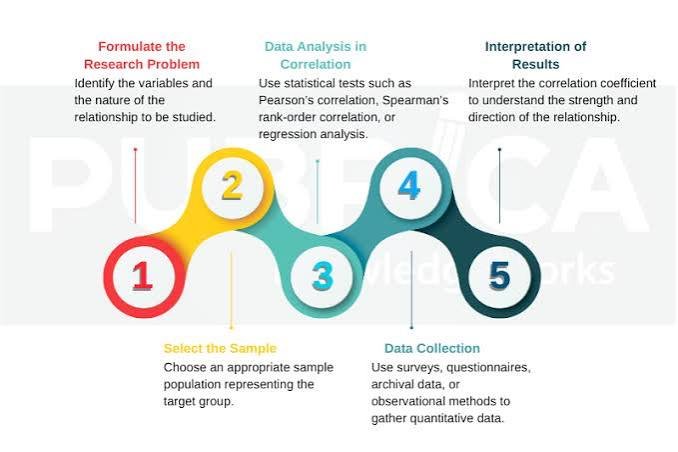
In this comprehensive guide, you’ll learn what correlational research design is, how it works, its defining characteristics, the different types of correlation, and why it remains one of the most valuable approaches in modern research. You’ll also discover how researchers collect and analyze correlational data, interpret statistical relationships, and avoid common misconceptions when drawing meaningful conclusions.
What Is Correlational Research Design?
Correlational research design is a type of research design used to examine the relationship between two or more variables without manipulating or controlling them. Instead of introducing an intervention, researchers observe variables as they naturally occur and determine whether changes in one variable are associated with changes in another.
In simple terms, correlational research seeks to answer questions such as:
- Is there a relationship between exercise and mental health?
- Does income level relate to spending habits?
- Is sleep duration associated with workplace productivity?
- Does social media use influence academic performance?
Unlike experimental research, researchers do not assign participants to treatment groups or manipulate independent variables. Instead, they collect existing data and apply statistical methods to determine the direction and strength of the correlation.
A correlational research design is therefore considered a non experimental research approach because it observes naturally occurring phenomena rather than creating experimental conditions. This makes it particularly useful when manipulation would be impossible or unethical.
For example, researchers cannot ethically require individuals to smoke cigarettes simply to determine whether smoking increases the risk of disease. Instead, they observe naturally occurring behaviors, collect correlational data, and analyze the statistical relationship between smoking habits and health outcomes.
Although this approach cannot prove a causal relationship, it often provides the first evidence that variables may be connected, encouraging further investigation through experimental research or other research methods.
Why Correlational Research Is Important
Understanding relationships between variables is one of the primary goals of scientific inquiry. Before researchers can determine whether one factor causes another, they often need to establish whether any relationship exists in the first place.
This is where correlational research becomes invaluable.
Many important research questions cannot be answered through controlled experiments because manipulating variables would be unethical, impractical, or prohibitively expensive. Instead, researchers rely on correlational studies to explore statistical relationships under naturally occurring conditions.
Consider the following examples:
- Is job satisfaction related to employee productivity?
- Does air pollution correspond with respiratory illnesses?
- Is internet usage associated with sleep quality?
- Does income level relate to healthcare access?
These questions involve variables that cannot easily be manipulated in a controlled environment. A correlational study allows researchers to investigate these relationships while preserving real-world conditions.
The findings from correlation research frequently serve as the foundation for policy decisions, organizational improvements, and future scientific investigations. In many disciplines, identifying relationships is the first step toward understanding complex phenomena.
Correlational research is widely used in:
- Education
- Psychology
- Sociology
- Healthcare
- Economics
- Public health
- Business
- Market research
- Environmental science
- Political science
Across these fields, researchers use statistical analysis to discover trends, identify associations, and generate hypotheses for future studies.
Why Choosing the Right Research Design Matters
Every successful study begins with selecting an appropriate research design.
A research design functions as the blueprint for the entire research process. It determines how participants are selected, what data collection methods will be used, which statistical tests will be performed, and how findings will be interpreted.
Choosing the wrong design can produce misleading results, weaken the quality of the study, and reduce confidence in its conclusions.
An effective research design enables researchers to:
- Answer a clearly defined research question.
- Collect reliable and accurate data.
- Reduce bias during data collection.
- Select appropriate statistical methods.
- Improve the credibility of findings.
- Draw meaningful conclusions from the results.
Correlational research is particularly appropriate when the objective is to understand whether variables move together rather than determine whether one directly causes another.
For example, if a researcher wants to examine whether customer satisfaction is related to employee engagement across different companies, a correlational research method provides an efficient and practical solution.
Key Characteristics of Correlational Research Design
Although every correlational study is unique, several defining characteristics distinguish this research method from other forms of research.
Examines Relationships Between Variables
The defining feature of correlational research is its emphasis on identifying relationships rather than establishing direct cause and effect.
Researchers examine whether variables change together and measure the strength of that association using a correlation coefficient.
For example, increased exercise may be associated with lower stress levels. The existence of this relationship does not necessarily mean exercise alone caused reduced stress, but it indicates that the variables are statistically connected.
Variables Are Not Manipulated
Unlike experimental research, correlational research does not involve manipulating independent variables.
Researchers simply observe existing conditions and collect data as events naturally occur.
This makes the approach suitable for investigating topics where experimental manipulation would be unethical or impossible.
Examples include:
- Income and educational attainment
- Smoking behavior and lung disease
- Social media use and anxiety
- Employee engagement and productivity
Because variables remain unchanged, participants continue their normal activities throughout the study.
Focuses on Naturally Occurring Data
Another important characteristic is the reliance on naturally occurring data.
Rather than creating artificial laboratory conditions, researchers collect information from surveys, observations, existing records, interviews, questionnaires, databases, or secondary data sources.
This often increases the practical relevance of the findings because they reflect real-world conditions rather than controlled environments.
Relies on Statistical Analysis
Correlational research depends heavily on statistical analysis to measure the strength and direction of relationships.
Researchers commonly calculate a correlation coefficient that summarizes how closely two variables are associated.
Additional statistical methods may also be used to strengthen interpretation, evaluate statistical significance, and identify broader statistical patterns within the data.
The appropriate statistical tool depends on the research question, the nature of the variables, and the type of data collected.
Cannot Establish Causation
Perhaps the most important characteristic of correlational research is that it cannot establish causation.
Finding a correlation between two variables does not automatically mean one variable causes the other.
For example, ice cream sales and drowning incidents often increase during summer months. While these variables display a positive correlation, neither causes the other. Instead, a third variable—hot weather—acts as a confounding factor that influences both.
Understanding this distinction helps researchers avoid incorrect interpretations and strengthens the quality of their findings.
Produces Valuable Insights for Future Research
Although correlational research cannot prove cause-and-effect relationships, it provides valuable insights that guide future investigations.
Many experimental studies begin after researchers first discover significant correlations between variables.
These findings help researchers identify promising areas for further investigation, refine research questions, and develop stronger hypotheses for future experimental research.
As a result, correlational studies play a critical role in expanding scientific knowledge while supporting evidence-based decision-making across numerous disciplines.
How Correlational Research Works
The correlational research method follows a systematic process that allows researchers to examine relationships objectively and scientifically.
First, the researcher identifies a specific research question involving two or more variables. The question should focus on determining whether a relationship exists rather than proving causation.
Next, researchers identify the target population and select participants using appropriate sampling techniques. Depending on the objectives of the study, data collection may involve surveys, questionnaires, observations, standardized assessments, organizational records, or publicly available databases.
Once sufficient data has been gathered, researchers organize the information and prepare it for statistical analysis. They then calculate an appropriate correlation coefficient to measure both the strength and direction of the relationship between variables.
Finally, the results are interpreted within the context of the study, existing literature, and possible limitations. Rather than concluding that one variable directly causes another, researchers explain the observed relationship while considering alternative explanations and the possibility of confounding variables. This careful interpretation ensures that correlational studies contribute reliable evidence and provide a strong foundation for future research.
Types of Correlation in Correlational Research
One of the most important concepts in correlational research is understanding the different types of correlation. The direction and strength of a relationship between variables determine how researchers interpret their findings. By calculating a correlation coefficient, researchers can identify whether variables increase together, move in opposite directions, or show no meaningful association at all.
Understanding these relationships helps researchers make informed interpretations while avoiding incorrect assumptions about causation.
Positive Correlation
A positive correlation occurs when two variables move in the same direction. As one variable increases, the other tends to increase as well. Likewise, when one decreases, the other usually decreases.
For example, there is often a positive correlation between the number of hours students study and their academic performance. Students who spend more time studying generally achieve higher examination scores, while those who study less may obtain lower grades.
Another example can be found in business, where customer satisfaction may have a positive relationship with customer loyalty. As satisfaction improves, repeat purchases often increase.
Although these examples demonstrate strong statistical relationships, researchers should remember that a positive correlation alone does not establish a causal relationship. Other factors may also influence the observed outcomes.
Negative Correlation
A negative correlation exists when one variable increases while the other decreases.
For instance, researchers may discover a negative correlation between stress management practices and employee burnout. Employees who regularly practice stress management techniques may experience lower levels of burnout.
Similarly, there may be a negative correlation between physical activity and the likelihood of developing certain chronic diseases. As exercise increases, health risks often decline.
Negative relationships are just as valuable as positive ones because they help researchers understand how variables interact under different circumstances.
No Correlation
Sometimes statistical analysis reveals little or no relationship between variables.
For example, a study examining shoe size and intelligence would likely find no meaningful correlation because changes in one variable have no systematic association with changes in the other.
Identifying the absence of correlation is equally important because it prevents researchers from making unsupported claims and helps narrow future research efforts toward more meaningful variables.
Understanding the Correlation Coefficient
The correlation coefficient is the primary statistical measure used in correlational research to determine both the strength and direction of a relationship between variables.
The coefficient typically ranges from -1 to +1.
A coefficient close to +1 indicates a strong positive correlation.
A coefficient close to -1 indicates a strong negative correlation.
A coefficient near 0 suggests little or no statistical relationship between the variables.
The closer the coefficient is to either extreme, the stronger the observed relationship.
Researchers frequently use Pearson correlation, commonly referred to as Pearsons r, when analyzing continuous quantitative variables that exhibit a linear relationship.
For example:
- +0.92 indicates a very strong positive correlation.
- +0.65 indicates a moderate positive correlation.
- -0.81 indicates a strong negative correlation.
- 0.04 indicates almost no relationship.
While the correlation coefficient provides valuable information, researchers must avoid interpreting it as proof of causation. Even a very high coefficient only demonstrates association, not cause and effect.
Data Collection in Correlational Research
The quality of any correlational study depends heavily on effective data collection. Poor-quality data can weaken statistical analysis and reduce the reliability of the findings.
Researchers select data collection methods based on the research question, available resources, and the characteristics of the target population.
Common methods include:
- Surveys
- Questionnaires
- Structured interviews
- Observations
- Organizational records
- Government databases
- Medical records
- Educational assessments
Many correlational studies also utilize secondary data that has already been collected by government agencies, research institutions, hospitals, or international organizations.
Using existing data often allows researchers to examine larger populations while reducing the time and cost associated with conducting original fieldwork.
Regardless of the source, researchers must ensure that the collected data is accurate, reliable, and appropriate for the intended statistical analysis.
Statistical Analysis in Correlational Research
Once data collection has been completed, researchers organize and analyze the information using appropriate statistical methods.
The primary objective is to determine whether a meaningful statistical relationship exists between the variables under investigation.
Several statistical techniques may be used depending on the complexity of the study.
Pearson Correlation
Pearson correlation is the most widely used statistical tool for measuring the relationship between two continuous variables.
It is especially appropriate when variables exhibit a linear relationship and meet the assumptions required for parametric analysis.
Pearsons r provides a simple numerical summary that allows researchers to interpret both the direction and strength of the relationship.
Multiple Regression
While correlation examines the association between variables, multiple regression enables researchers to evaluate how several independent variables collectively predict a single outcome.
For example, researchers investigating academic performance may include study time, attendance, family income, and sleep quality within the same statistical model.
Multiple regression helps determine which variables contribute most strongly while accounting for the influence of others.
Factor Analysis
In more complex research projects, factor analysis may be used to identify underlying patterns among numerous variables.
Instead of examining individual relationships separately, this statistical method groups related variables into broader factors, allowing researchers to simplify large datasets and improve interpretation.
Although factor analysis differs from correlation analysis, both techniques often complement each other in advanced quantitative research.
Statistical Significance
Researchers also evaluate statistical significance to determine whether an observed correlation is likely to reflect a genuine relationship rather than random chance.
A statistically significant result increases confidence that the observed association exists within the population being studied.
However, statistical significance should always be interpreted alongside the size of the correlation coefficient, practical importance, and study limitations.
Correlational Research vs. Experimental Research
Students often confuse correlational research with experimental research because both investigate variables and rely on statistical analysis.
Despite these similarities, they differ fundamentally in purpose and methodology.
Experimental research seeks to establish cause-and-effect relationships by manipulating independent variables and controlling experimental conditions.
Researchers conducting experiments typically use random assignment to create comparable groups and minimize bias.
In contrast, correlational research observes naturally occurring variables without manipulation.
Rather than testing whether one variable directly causes another, researchers examine whether variables are statistically associated.
For example, an experimental study might assign participants to different exercise programs to evaluate their effects on blood pressure.
A correlational study, however, would simply observe existing exercise habits and compare them with blood pressure measurements collected from participants.
Because no intervention occurs, correlational studies are generally considered a non experimental research approach.
Both research methods play essential roles in scientific investigation.
Correlational research often identifies important relationships that later become the focus of controlled experiments.
Correlational Research vs. Descriptive Research
Although correlational research and descriptive research both involve observation, they serve different purposes.
Descriptive research focuses on describing characteristics, behaviors, or conditions within a population.
For example, a descriptive study may report the percentage of university students who own smartphones or the average age of hospital patients.
Correlational research goes a step further by examining whether relationships exist between two or more variables.
Instead of simply describing smartphone ownership, researchers may investigate whether smartphone usage is related to academic performance or sleep quality.
In other words, descriptive research answers “what exists,” whereas correlational research answers “how variables are related.”
Correlation Does Not Mean Causation
Perhaps the most important principle in correlational research is understanding that correlation does not imply causation.
A statistical relationship between variables does not automatically mean that one variable produces changes in another.
Several explanations may account for an observed correlation.
The first possibility is genuine causation, where one variable truly influences another.
The second possibility involves reverse causation, where the direction of influence operates in the opposite way.
The third possibility involves a confounding factor, sometimes called a third variable, which affects both variables simultaneously.
For example, researchers may observe a strong positive correlation between ice cream sales and drowning incidents.
It would be incorrect to conclude that purchasing ice cream causes drowning.
Instead, hot weather increases both swimming activity and ice cream consumption, creating the observed relationship.
This example illustrates a classic spurious correlation, where two variables appear related even though no direct causal relationship exists between them.
Recognizing the possibility of spurious correlation helps researchers avoid misleading conclusions and strengthens the credibility of their work.
Because correlational studies cannot eliminate every confounding factor, researchers should interpret findings carefully and recommend additional experimental research whenever establishing causation becomes necessary.
Real-World Applications of Correlational Research
One of the greatest strengths of correlational research is its versatility. Because it examines variables in their natural settings without manipulation, this research design can be applied across numerous academic disciplines and professional industries. Researchers use correlational studies to identify trends, understand variable relationships, and generate evidence that informs future research and practical decision-making.
Education
Education is one of the fields where correlational research is most frequently used.
Researchers often investigate whether there is a relationship between study habits, attendance, motivation, classroom engagement, and academic performance. They may also examine associations between class size and student achievement or between teacher experience and learning outcomes.
These studies help educational institutions identify factors that contribute to student success without disrupting the normal learning environment.
Healthcare and Public Health
Healthcare researchers rely heavily on correlational studies to explore associations between lifestyle factors and health outcomes.
Examples include relationships between:
- Physical activity and heart health
- Sleep quality and mental well-being
- Smoking and respiratory diseases
- Diet and obesity
- Stress and blood pressure
Because many of these variables cannot be manipulated ethically, correlational research provides an effective alternative for investigating important public health issues.
Business and Market Research
Businesses frequently use correlational research to understand customer behavior and improve organizational performance.
In market research, analysts may examine the relationship between advertising expenditure and product sales, customer satisfaction and brand loyalty, or employee engagement and productivity.
These findings provide valuable insights that help organizations develop better marketing strategies, improve customer experiences, and increase profitability.
Psychology and Social Science
Psychologists often conduct correlational studies to understand human behavior.
For example, researchers may investigate whether social media usage is associated with anxiety, whether emotional intelligence relates to workplace success, or whether family support influences life satisfaction.
Similarly, social science researchers use correlation research to examine relationships involving income, education, crime rates, voting behavior, and social mobility.
Economics and Environmental Science
Economists use correlational research to examine relationships between inflation, unemployment, consumer spending, and economic growth.
In environmental science, researchers investigate associations between pollution levels, biodiversity, climate variables, and ecosystem health.
Because these complex systems cannot usually be manipulated experimentally, correlational research remains one of the most practical approaches for understanding broad societal and environmental issues.
Advantages of Correlational Research Design
The widespread use of correlational research is largely due to its numerous advantages.
Studies Variables in Natural Settings
Unlike laboratory experiments, correlational research allows researchers to investigate variables exactly as they occur in real life.
This increases the practical relevance of the findings and often improves their applicability to real-world situations.
Ethically Appropriate
Many research questions involve variables that cannot ethically be manipulated.
Researchers cannot deliberately expose participants to harmful behaviors, dangerous environments, or unhealthy lifestyles simply to observe outcomes.
Correlational studies allow these important questions to be investigated responsibly.
Cost-Effective
Many correlational studies use existing databases, surveys, organizational records, or secondary data.
As a result, they often require fewer financial resources than large-scale experimental research.
Useful for Generating New Research Questions
Many scientific discoveries begin with observed correlations.
Once researchers identify a meaningful relationship, they can design future experimental research to investigate possible causal mechanisms.
Correlational research therefore plays an important role in advancing scientific knowledge.
Supports Large Population Studies
Because variables are simply observed rather than manipulated, researchers can often include thousands—or even millions of participants.
Large datasets improve statistical power and allow researchers to identify statistical patterns that smaller studies may overlook.
Limitations of Correlational Research Design
Although correlational research offers many strengths, researchers should also recognize its limitations.
Cannot Establish Causation
The most significant limitation is the inability to establish causation.
Even when variables display a very strong correlation, researchers cannot conclude that one variable directly causes changes in the other.
Additional evidence from experimental research is usually required before making causal claims.
Confounding Variables
A confounding factor may influence both variables simultaneously, creating an apparent relationship that does not actually reflect direct influence.
For example, socioeconomic status may affect both educational achievement and health outcomes.
If researchers fail to account for this factor, the observed relationship may be misleading.
Risk of Spurious Correlation
Some correlations occur purely by coincidence.
These spurious correlation findings can appear convincing statistically while lacking any genuine logical connection.
Researchers should therefore interpret statistical relationships carefully and consider alternative explanations before drawing conclusions.
Limited Control Over Variables
Because variables occur naturally, researchers have little control over external influences that may affect the study.
Unexpected environmental, social, economic, or personal factors may influence the collected data.
Potential Measurement Errors
Poor survey design, inaccurate instruments, incomplete records, or participant bias can reduce the quality of data collection and weaken the reliability of the results.
Using validated measurement tools helps minimize these problems.
How to Conduct a High-Quality Correlational Study
A successful correlational study requires careful planning and systematic execution.
Step 1: Develop a Clear Research Question
Every study begins with a well-defined research question.
The question should focus on determining whether a relationship exists between variables rather than attempting to prove causation.
Step 2: Review Existing Literature
A thorough literature review helps researchers understand previous findings, identify knowledge gaps, and select the most appropriate research method.
Reviewing earlier studies also helps refine hypotheses and improve study design.
Step 3: Select Variables
Researchers clearly define the variables to be measured.
Operational definitions ensure that every variable can be observed or measured consistently throughout the study.
Step 4: Choose Appropriate Participants
Selecting representative participants improves the generalizability of findings.
Researchers should use appropriate sampling techniques while minimizing selection bias whenever possible.
Step 5: Collect High-Quality Data
Accurate data collection is essential.
Depending on the objectives, researchers may use questionnaires, observations, standardized assessments, interviews, administrative records, or secondary data sources.
Reliable data forms the foundation for meaningful statistical analysis.
Step 6: Analyze the Data
Researchers apply suitable statistical methods to calculate the correlation coefficient and evaluate statistical significance.
Depending on the complexity of the study, additional analyses such as multiple regression or factor analysis may also be performed.
Step 7: Interpret Results Carefully
Researchers should explain the observed relationship objectively while acknowledging study limitations.
Rather than claiming direct causation, they should discuss possible explanations, identify potential confounding factors, and recommend areas for future investigation.
Common Mistakes to Avoid
Even experienced researchers can make errors when conducting correlational research.
Some of the most common mistakes include:
- Assuming that correlation automatically proves causation.
- Ignoring possible confounding factors.
- Using poor-quality or incomplete data.
- Selecting inappropriate statistical tests.
- Overgeneralizing findings beyond the study population.
- Misinterpreting weak correlation coefficients as strong evidence.
- Drawing conclusions without considering statistical significance.
Avoiding these mistakes improves both the quality and credibility of the research.
Best Practices for Researchers
Researchers can strengthen the quality of correlational studies by following several established best practices.
- Clearly define the research question before collecting data.
- Select reliable measurement instruments.
- Use representative samples whenever possible.
- Apply appropriate statistical methods.
- Report both strengths and limitations honestly.
- Interpret findings conservatively.
- Distinguish clearly between correlation and causation.
- Compare findings with previous correlational studies.
- Recommend future experimental research where causal questions remain unanswered.
Following these practices enhances scientific rigor while producing findings that other researchers can trust and build upon.
Frequently Asked Questions
Is correlational research quantitative or qualitative?
Correlational research is primarily a quantitative research approach because it relies on numerical data, statistical analysis, and mathematical measures such as the correlation coefficient. Although qualitative information may support interpretation, the primary analysis is quantitative.
What is the difference between correlational research and experimental research?
Experimental research manipulates variables to establish cause-and-effect relationships, whereas correlational research simply examines whether variables are associated without manipulating them.
Can correlational research prove causation?
No. Correlational research identifies relationships between variables but cannot establish causation because other factors may influence the observed association.
When should researchers use correlational research?
Researchers should choose correlational research when manipulation of variables is impractical, unethical, or unnecessary and the objective is to understand statistical relationships rather than determine direct cause and effect.
Why is the correlation coefficient important?
The correlation coefficient measures both the direction and strength of a relationship between variables, allowing researchers to interpret how closely those variables are associated.
Conclusion
Correlational research design is one of the most valuable approaches for examining relationships between variables in natural settings. By allowing researchers to investigate associations without manipulating participants or experimental conditions, it provides practical solutions for answering important research questions across education, healthcare, psychology, business, market research, economics, environmental science, and many other disciplines.
Throughout this guide, we explored the meaning of correlational research design, its defining characteristics, the different types of correlation, and the role of the correlation coefficient in measuring statistical relationships. We also examined how researchers conduct a correlational study through careful data collection, statistical analysis, and thoughtful interpretation while recognizing the important distinction between correlation and causation.
Although correlational research cannot establish a causal relationship, it remains an essential research method for identifying patterns, generating hypotheses, and providing valuable insights that inform future investigations. When researchers use appropriate statistical tools, address potential confounding factors, and interpret findings responsibly, correlational studies can produce meaningful conclusions that advance knowledge and support evidence-based decision-making.
Ultimately, the effectiveness of any research design depends on selecting the method that best addresses the research question. When the objective is to understand how variables are related under real-world conditions, correlational research design offers a flexible, scientifically sound, and highly practical approach for producing reliable evidence and expanding our understanding of complex relationships.
Be the first to comment