Research plays a fundamental role in expanding knowledge, solving complex problems, and informing evidence-based decision-making across disciplines. Whether researchers are investigating the causes of disease, evaluating healthcare interventions, studying educational outcomes, or analyzing social trends, selecting the appropriate research design is essential for producing credible and meaningful conclusions. Among the many observational research methods available, the cohort study has become one of the most respected and widely used approaches for examining how exposures influence outcomes over time.
Unlike experimental research, where investigators actively assign participants to treatment or control groups through randomization, a cohort study is an observational study that follows groups of individuals based on their exposure to a particular factor. Researchers observe what happens naturally without manipulating the study environment. This makes the design especially valuable when experimental interventions would be impractical, unethical, or impossible to conduct.
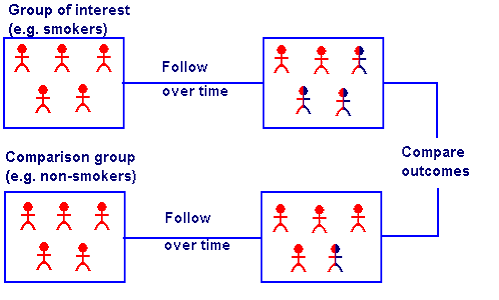
For example, scientists cannot randomly assign people to smoke cigarettes simply to determine whether smoking causes lung cancer. Instead, they observe groups of smokers and non-smokers over many years, comparing disease incidence between the two populations. This type of longitudinal study enables researchers to investigate potential relationships between exposure and disease while maintaining ethical research standards.
Cohort studies have transformed modern epidemiology and public health by helping researchers identify risk factors for chronic diseases, evaluate preventive interventions, and understand long-term health outcomes. Landmark investigations such as the Framingham Heart Study and the Nurses’ Health Study have generated valuable evidence that continues to shape clinical practice and healthcare policy around the world.
Because cohort studies observe participants over extended follow-up periods, they provide unique opportunities to establish a temporal relationship between exposure and outcome. Although they cannot achieve the same level of control as randomized experiments, carefully designed cohort studies can produce strong observational evidence and support informed causal inference when interpreted appropriately.
In this comprehensive guide, you’ll learn what a cohort study is, explore its defining characteristics, understand its major types, examine practical examples, discover its advantages and limitations, compare it with other research designs, and learn how researchers conduct high-quality cohort research that produces reliable and meaningful evidence.
What Is a Cohort Study?
A cohort study is an observational study in which researchers follow a group of participants over time to determine whether exposure to a specific factor influences the likelihood of developing a particular outcome. Rather than assigning treatments or interventions, researchers observe naturally occurring exposures and compare health outcomes, behaviors, or events between different groups.
The defining characteristic of a cohort study is that participants are classified according to their exposure status before the outcome occurs. Researchers then monitor these groups during a defined follow-up period to determine whether differences in disease incidence, behavior, or other measurable outcomes emerge.
Because this research design observes events as they unfold over time, it is particularly effective for investigating potential risk factors, estimating incidence rates, and identifying associations between exposures and subsequent outcomes.
For instance, imagine researchers want to determine whether prolonged exposure to air pollution increases the risk of asthma. They recruit participants from two communities—one with high pollution levels and another with cleaner air—and follow both groups for several years. By comparing the incidence of asthma between the exposed group and the unexposed group, researchers can evaluate whether a meaningful relationship exists.
Unlike experimental research, where investigators manipulate variables, cohort studies observe real-life circumstances as they naturally occur. This makes them highly valuable in situations where controlled experimentation is unethical or impractical.
Why Cohort Studies Are Important
Many of today’s most significant scientific discoveries have come from cohort research. These studies provide valuable insights into disease development, lifestyle factors, environmental exposures, and long-term health outcomes.
One major advantage is the ability to establish the correct sequence of events. Since researchers identify exposure before the outcome develops, they can determine whether an exposure preceded the disease or condition being investigated. This temporal relationship strengthens the evidence for a possible association.
Cohort studies are particularly valuable because they allow researchers to:
- Measure disease incidence within a population.
- Identify potential risk factors.
- Evaluate multiple outcomes from a single exposure.
- Observe long-term health trends.
- Support evidence-based healthcare decisions.
- Inform public health policies.
- Improve preventive medicine strategies.
For example, long-term studies investigating dietary habits have shown important associations between nutrition and chronic diseases such as diabetes, cardiovascular disease, and certain cancers. Similar cohort analyses have improved understanding of occupational hazards, environmental pollution, physical activity, mental health, and aging.
Although cohort studies do not prove causation as definitively as randomized controlled trials, they often provide the strongest available evidence when experimentation is not feasible.
Why Research Design Matters
Every successful research project begins with selecting an appropriate research design. The design acts as the blueprint that guides participant selection, data collection, statistical analysis, interpretation of findings, and reporting of results.
Choosing the wrong methodology can lead to biased findings, weak conclusions, and wasted resources. Therefore, researchers carefully evaluate the research question before deciding whether a cohort study represents the most suitable methodological approach.
A well-designed research study helps researchers:
- Minimize bias.
- Improve internal validity.
- Strengthen external validity.
- Produce reliable evidence.
- Support meaningful statistical analysis.
- Increase confidence in findings.
- Improve reproducibility.
Before beginning any cohort investigation, researchers typically conduct a comprehensive literature review to understand existing evidence, identify research gaps, refine hypotheses, and develop an appropriate study protocol.
The quality of a cohort study depends not only on the research question but also on participant selection, exposure assessment, outcome measurement, follow-up procedures, and analytical techniques.
Key Characteristics of a Cohort Study
Although cohort studies vary depending on their objectives, several defining characteristics distinguish them from other research methods.
Observational Rather Than Experimental
A cohort study is classified as observational research because researchers observe exposures without manipulating variables or assigning treatments.
Participants continue their normal activities while investigators collect data over time. This approach makes cohort studies particularly useful for examining naturally occurring exposures such as smoking, dietary habits, occupational risks, or environmental pollutants.
Because there is no intervention, ethical concerns associated with experimental manipulation are minimized.
Participants Are Grouped by Exposure
Instead of assigning treatments randomly, researchers classify participants according to whether they have been exposed to a particular factor.
Typical comparisons include:
- Smokers versus non-smokers.
- Physically active versus inactive adults.
- Individuals exposed to pollution versus those living in cleaner environments.
- Healthcare workers exposed to infectious diseases versus those without exposure.
This exposure-based grouping forms the foundation of cohort analysis.
Longitudinal Follow-Up
Unlike cross-sectional studies that collect data at a single point in time, cohort studies involve longitudinal observation.
Participants are followed over months, years, or even decades.
Long-term follow-up allows researchers to observe disease occurrence, behavioral changes, and health outcomes as they develop naturally.
This ability to measure changes over time is one of the greatest strengths of the cohort design.
Measurement of Incidence
Cohort studies directly measure incidence rather than prevalence.
Researchers calculate how many new cases of a disease or condition develop during the follow-up period.
Incidence data provide valuable information about disease risk and enable the calculation of measures such as relative risk and incidence rates.
Multiple Outcomes Can Be Investigated
One exposure can lead to many different outcomes.
For example, researchers investigating smoking may simultaneously examine:
- Lung cancer.
- Heart disease.
- Stroke.
- Chronic obstructive pulmonary disease.
- Reduced life expectancy.
This efficiency makes cohort studies particularly valuable for long-term public health research.
Strong Temporal Relationship
One of the defining strengths of a cohort study is its ability to establish a temporal relationship.
Because exposure is measured before the outcome occurs, researchers can determine the chronological sequence of events.
Although this does not automatically prove a causal relationship, it strengthens evidence supporting causal inference.
Large Sample Sizes
Many cohort studies involve thousands—or even hundreds of thousands—of participants.
Large sample populations improve statistical power, increase the precision of estimates, and enhance the generalizability of findings.
Examples include national health databases, birth cohorts, occupational registries, and large epidemiological studies.
Comprehensive Data Collection
High-quality cohort research relies on systematic data collection throughout the follow-up period.
Researchers may gather information from:
- Medical records.
- Electronic health records.
- Questionnaires.
- Physical examinations.
- Laboratory tests.
- Interviews.
- National health registries.
- Administrative databases.
Combining multiple data sources improves data integrity and supports more accurate outcome assessment.
Focus on Real-World Evidence
Unlike laboratory experiments conducted under highly controlled conditions, cohort studies generate real-world evidence by observing participants within their natural environments.
This practical approach increases external validity because findings often reflect everyday conditions more accurately than tightly controlled experiments.
As a result, cohort research plays a central role in public health, clinical medicine, environmental science, occupational health, education, and many other disciplines where understanding long-term outcomes is essential.
Types of Cohort Study
Not all cohort studies follow the same approach. Researchers choose a particular design based on the research question, available resources, the study timeline, and the availability of data. Understanding the different types of cohort study helps researchers select the most appropriate research design while ensuring the methodology aligns with the objectives of the study.
The three primary types are prospective cohort studies, retrospective cohort studies, and ambidirectional cohort studies. Although each follows the same fundamental principle of observing participants based on exposure, they differ in how data are collected and how participants are followed over time.
Prospective Cohort Study
A prospective cohort study follows participants forward in time. Researchers first identify individuals who share a common characteristic or exposure and then observe them over months or years to determine whether they develop a particular outcome.
For example, researchers investigating the long-term effects of smoking may recruit one group of smokers and another group of non-smokers. Neither group has lung cancer when the study begins. Researchers then monitor both groups for several years to determine whether smoking is associated with an increased risk of developing the disease.
Because exposure is measured before the outcome occurs, prospective cohort studies establish a clear temporal relationship between exposure and disease. This makes them one of the strongest forms of observational research for examining potential causal relationships.
Prospective cohort studies offer several advantages. They minimize recall bias because information is collected as events occur, allow researchers to study multiple outcomes resulting from a single exposure, and provide high-quality data through systematic follow-up.
However, they also require substantial financial resources, long follow-up periods, and effective participant retention strategies. If many participants withdraw before the study ends, the validity of the findings may be affected.
Retrospective Cohort Study
A retrospective cohort study examines events that have already occurred using historical records and previously collected data. Instead of following participants into the future, researchers reconstruct the study using existing databases such as medical records, employment files, insurance claims, or national health registries.
Suppose researchers want to investigate whether exposure to industrial chemicals increased the risk of respiratory disease among factory workers. Rather than waiting years for new cases to develop, they analyze employment records from the past twenty years alongside hospital records to compare health outcomes between exposed and unexposed workers.
Retrospective cohort studies are generally faster and less expensive than prospective studies because both exposure and outcome have already occurred. Researchers can complete the investigation within months rather than years.
The main limitation is that researchers must rely on the quality of existing records. Missing information, inconsistent documentation, or inaccurate historical data may reduce the reliability of the study and introduce bias.
Ambidirectional Cohort Study
An ambidirectional cohort study combines elements of both prospective and retrospective designs.
Researchers begin by reviewing historical records to identify previous exposure and early outcomes before continuing to follow participants into the future to observe additional events.
For example, investigators studying cardiovascular disease may analyze patient records from the previous ten years to determine baseline exposure to risk factors such as hypertension and obesity. They then continue monitoring the same participants for another five years to observe the occurrence of heart attacks or strokes.
This approach enables researchers to maximize existing information while collecting new data, making it particularly valuable when historical records are available but additional follow-up is needed.
Although ambidirectional studies provide comprehensive evidence, they are more complex to design and require careful coordination between historical data and prospective data collection.
How a Cohort Study Works
Conducting a high-quality cohort study requires a structured process that begins with careful planning and ends with rigorous statistical analysis. Every stage of the research process contributes to the credibility of the findings and the overall quality of the research.
Define the Research Question
Every successful study begins with a clearly defined research question.
Researchers should identify the exposure they wish to investigate, specify the outcome they intend to measure, determine the target population, and establish the duration of follow-up.
For example, a researcher may ask whether regular physical exercise reduces the risk of developing cardiovascular disease among adults between 40 and 65 years of age.
A focused research question provides direction for every subsequent stage of the study.
Select the Study Population
Researchers next identify a cohort that shares common characteristics relevant to the investigation.
Participants may include healthcare workers, university students, factory employees, pregnant women, children born within a specific period, or residents of a particular geographic region.
Clear inclusion and exclusion criteria ensure that the selected participants accurately represent the population of interest while reducing unnecessary variability within the study.
Choosing an appropriate study population strengthens both the validity and reliability of the research findings.
Classify Participants by Exposure
Unlike experimental research, where participants may be assigned to treatment groups, a cohort study classifies participants according to naturally occurring exposure.
Researchers may compare:
- Smokers and non-smokers
- Vaccinated and unvaccinated individuals
- Employees exposed to hazardous chemicals and those without exposure
- Individuals with active lifestyles and those who are physically inactive
Importantly, participants do not have the outcome of interest when the study begins.
This sequence helps establish whether exposure precedes the development of the outcome.
Collect Baseline Data
Before follow-up begins, researchers gather detailed baseline information for every participant.
Baseline data often include age, sex, medical history, educational level, occupation, lifestyle behaviors, medication use, body mass index, family history, and socioeconomic characteristics.
Collecting comprehensive baseline data allows researchers to identify potential confounding variables that may influence the relationship between exposure and outcome.
This information later becomes essential during statistical analysis.
Follow Participants Over Time
Researchers monitor participants throughout the observation period using scheduled follow-up assessments.
Depending on the objectives of the study, follow-up may occur every few months, annually, or over several decades.
Data collection methods may include clinical examinations, laboratory testing, electronic health records, structured interviews, questionnaires, wearable health devices, or government registries.
Consistent follow-up improves data quality while reducing the likelihood of missing information.
Measure Study Outcomes
Throughout the follow-up period, researchers record whether participants experience the outcome being investigated.
Examples include:
- Development of diabetes
- Diagnosis of cancer
- Occurrence of cardiovascular disease
- Recovery from illness
- Academic performance
- Employee promotion
- Customer retention
- Mortality
Using standardized measurement procedures ensures that outcomes are evaluated consistently across all participants, improving the validity of the study.
Analyze the Data
Once data collection is complete, researchers compare outcome rates between exposed and unexposed groups.
Depending on the research objectives, statistical analysis may involve calculating incidence rates, estimating relative risk, performing survival analysis, applying Cox proportional hazards models, conducting logistic regression, or using multivariable regression techniques.
These statistical methods allow researchers to estimate the strength of the relationship between exposure and outcome while adjusting for potential confounding variables.
Careful statistical analysis enables researchers to draw meaningful conclusions and generate valuable insights that contribute to evidence-based decision-making.
Cohort Study vs. Case-Control Study
Students and beginning researchers often confuse cohort studies with case-control studies because both are observational research designs. However, the two approaches differ in several important ways.
A cohort study begins by classifying participants according to exposure and then follows them over time to observe whether an outcome develops. In contrast, a case-control study starts with individuals who already have a particular disease or outcome and looks backward to identify previous exposures.
Because a cohort study follows participants from exposure to outcome, it allows researchers to calculate incidence rates and estimate relative risk. A case-control study, however, is generally used to estimate odds ratios because it begins with the outcome rather than the exposure.
Cohort studies are particularly useful for investigating rare exposures, whereas case-control studies are more appropriate for studying rare diseases.
Although cohort studies often require more time and financial resources, they generally provide stronger evidence regarding the temporal relationship between exposure and outcome, making them highly valuable in epidemiology, public health, and clinical research.
Cohort Study vs. Cross-Sectional Study
Another research design commonly compared with a cohort study is the cross-sectional study.
Although both are forms of observational research, they answer different types of research questions.
A cross-sectional study collects exposure and outcome data at a single point in time. It provides a snapshot of a population and is particularly useful for estimating prevalence.
A cohort study, by contrast, follows participants over time to observe how outcomes develop after exposure has occurred. This longitudinal approach enables researchers to calculate incidence and better understand disease progression and risk factors.
Because cohort studies establish the sequence of events more clearly, they generally provide stronger evidence when evaluating potential associations and supporting causal inference than cross-sectional research, although they still cannot establish causation as confidently as randomized experimental research.
Cohort Study vs. Randomized Controlled Trial
A cohort study and a randomized controlled trial (RCT) are both valuable research designs, but they serve different purposes and offer different levels of evidence. Understanding the differences helps researchers select the most appropriate methodology for their research question.
The most significant distinction lies in how participants are assigned to groups. In a randomized controlled trial, researchers use random assignment to place participants into intervention and control groups. This process minimizes selection bias and balances known and unknown confounding variables, making RCTs the gold standard for evaluating the effectiveness of interventions.
In contrast, a cohort study is an observational research design. Researchers do not manipulate exposures or assign participants to groups. Instead, they observe naturally occurring exposures and follow participants over time to determine whether outcomes differ between exposed and unexposed groups.
For example, it would be unethical to randomly assign individuals to smoke cigarettes for several decades simply to determine whether smoking causes lung cancer. A cohort study provides an ethical alternative by observing people who already smoke and comparing them with individuals who do not smoke.
Randomized controlled trials generally provide stronger evidence for establishing causation because randomization minimizes bias. However, cohort studies often have greater practical value because they allow researchers to investigate questions that cannot be studied experimentally due to ethical, financial, or logistical constraints.
Both research designs contribute significantly to evidence-based practice, and the choice depends on the objectives, ethical considerations, and feasibility of the study.
Advantages of a Cohort Study
Cohort studies remain one of the most respected observational research designs because they provide valuable insights into disease development, risk factors, and long-term outcomes under real-world conditions.
Establishes the Temporal Sequence
One of the greatest strengths of a cohort study is its ability to establish that exposure occurs before the outcome develops.
Because participants are identified before experiencing the outcome, researchers can confidently determine the sequence of events. This temporal relationship is essential when investigating potential risk factors and supports stronger scientific interpretations.
Measures Disease Incidence
Unlike many other observational designs, cohort studies allow researchers to calculate incidence rates.
Researchers can determine how many new cases of a disease occur during the follow-up period, providing valuable information about disease occurrence and population health.
This makes cohort studies particularly useful in epidemiology and public health.
Examines Multiple Outcomes
A single exposure may influence numerous health or behavioral outcomes.
For example, researchers studying cigarette smoking can investigate its association with lung cancer, heart disease, stroke, chronic obstructive pulmonary disease, and premature mortality within the same study.
This flexibility increases the efficiency and value of the research.
Suitable for Rare Exposures
Although cohort studies are not ideal for investigating rare diseases, they are particularly effective for studying uncommon exposures.
Researchers may investigate workers exposed to hazardous chemicals, astronauts exposed to cosmic radiation, or individuals carrying rare genetic mutations.
Following these groups over time provides valuable evidence that would be difficult to obtain using other research designs.
Produces Strong Observational Evidence
While cohort studies cannot achieve the same level of experimental control as randomized trials, they provide stronger observational evidence than many other non-experimental research methods.
When carefully designed and analyzed, they support informed decision-making in healthcare, education, environmental science, occupational health, and public policy.
Supports Public Health Decision-Making
Many national health recommendations are based on findings from large cohort studies.
Researchers use these studies to investigate nutrition, physical activity, environmental exposures, vaccination effectiveness, chronic disease prevention, and lifestyle behaviors.
The findings often influence healthcare guidelines and government policies.
Limitations of a Cohort Study
Despite their many advantages, cohort studies also present several challenges that researchers must consider during planning and interpretation.
Understanding these limitations helps ensure that findings are interpreted appropriately.
Long Follow-Up Periods
Many diseases develop slowly over several years or even decades.
Researchers studying chronic illnesses such as cancer or cardiovascular disease may need to follow participants for extended periods before enough outcomes occur for meaningful analysis.
Long follow-up periods increase costs and require sustained participant engagement.
High Financial Cost
Large cohort studies often require substantial funding.
Researchers must recruit participants, collect repeated measurements, maintain data management systems, employ research staff, and monitor participants throughout the study period.
Prospective cohort studies, in particular, can require millions of dollars and many years to complete.
Participant Attrition
Loss to follow-up is a common challenge in longitudinal research.
Participants may relocate, lose interest, withdraw consent, or become unreachable.
If attrition differs between exposure groups, the results may become biased and reduce the validity of the findings.
Researchers therefore implement retention strategies such as regular communication, follow-up reminders, and participant incentives.
Confounding Variables
Because researchers do not randomly assign exposures, other variables may influence both the exposure and the outcome.
For example, individuals who exercise regularly may also maintain healthier diets, avoid smoking, and have greater access to healthcare.
If these confounding factors are not properly controlled, they may distort the observed relationship.
Researchers often address this issue through multivariable regression, stratification, matching, or propensity score methods.
Inefficient for Rare Diseases
When the outcome of interest is extremely uncommon, cohort studies may require very large populations and lengthy follow-up periods before enough cases occur.
In these situations, a case-control study is often more efficient.
Potential Sources of Bias in Cohort Studies
Although cohort studies are carefully designed, several forms of bias can threaten the validity of the findings.
Recognizing these challenges allows researchers to implement strategies that improve research quality.
Selection Bias
Selection bias occurs when participants entering the study differ systematically from those who are not included.
If the exposed and unexposed groups differ substantially before follow-up begins, observed differences may reflect pre-existing characteristics rather than the exposure itself.
Researchers minimize selection bias by establishing clear eligibility criteria and selecting comparable groups.
Information Bias
Information bias arises when exposure or outcome data are measured inaccurately.
Examples include incomplete medical records, inconsistent questionnaires, or errors in data entry.
Using standardized data collection procedures, validated measurement tools, and trained data collectors helps improve data accuracy.
Loss-to-Follow-Up Bias
When a large proportion of participants leave the study before completion, the remaining sample may no longer represent the original population.
Researchers reduce this risk by maintaining regular contact with participants and implementing comprehensive follow-up procedures.
Confounding Bias
Confounding occurs when a third variable influences both the exposure and the outcome.
For example, age may influence both physical activity levels and cardiovascular disease risk.
Researchers address confounding through careful study design and advanced statistical methods that adjust for multiple variables simultaneously.
Applications of Cohort Studies
Because cohort studies observe participants over time, they are widely used across numerous academic and professional disciplines.
In medicine, researchers investigate disease progression, treatment outcomes, vaccine effectiveness, medication safety, and risk factors for chronic illnesses.
In public health, cohort studies evaluate nutrition programs, environmental exposures, smoking cessation initiatives, maternal health, and infectious disease prevention.
Educational researchers use cohort studies to examine academic performance, graduation rates, curriculum effectiveness, and long-term educational outcomes.
Business organizations conduct cohort analyses to understand customer retention, purchasing behavior, employee development, and workforce productivity.
In environmental science, researchers investigate pollution exposure, occupational hazards, climate change, and ecosystem health by monitoring populations across extended periods.
The versatility of cohort studies makes them one of the most valuable observational research designs available to modern researchers.
Best Practices for Conducting a High-Quality Cohort Study
Producing reliable evidence requires more than simply following participants over time.
Researchers should begin with a clearly defined research question that identifies the exposure, outcome, and target population.
Eligibility criteria should be established before recruitment begins to reduce selection bias.
Comprehensive baseline data should be collected using standardized instruments to improve measurement accuracy.
Researchers should monitor participants consistently throughout the follow-up period while minimizing loss to follow-up through effective communication and retention strategies.
Appropriate statistical methods should be selected based on the study objectives, and confounding variables should be identified and adjusted for during analysis.
Finally, researchers should report their methodology transparently, acknowledge limitations honestly, and interpret findings cautiously to ensure that the study contributes credible evidence to the scientific literature.
Frequently Asked Questions
What is a cohort study?
A cohort study is an observational research design in which researchers follow a group of participants over time to examine whether a particular exposure is associated with the development of specific outcomes.
What is the difference between a prospective and retrospective cohort study?
A prospective cohort study follows participants into the future after measuring exposure, whereas a retrospective cohort study uses historical records to investigate exposures and outcomes that have already occurred.
Can a cohort study establish causation?
No. Although a cohort study provides stronger evidence for temporal relationships than many observational designs, it cannot establish causation with the same confidence as a randomized controlled trial because random assignment is absent.
When should researchers choose a cohort study?
Researchers should choose a cohort study when they want to investigate the long-term effects of an exposure, calculate disease incidence, examine multiple outcomes, or study exposures that cannot be assigned experimentally for ethical or practical reasons.
Why are cohort studies important in epidemiology?
Cohort studies help researchers identify risk factors, estimate disease incidence, monitor population health, evaluate preventive interventions, and generate evidence that informs healthcare policy and clinical practice.
Conclusion
A cohort study is one of the most powerful observational research designs for examining how exposures influence outcomes over time. By following participants who share common characteristics and comparing exposed and unexposed groups, researchers can investigate disease development, identify risk factors, and generate high-quality evidence that supports informed decision-making.
Throughout this guide, we have explored the definition, characteristics, types, methodology, advantages, limitations, applications, and best practices of cohort studies. We also compared cohort studies with case-control studies, cross-sectional studies, and randomized controlled trials to highlight when each research design is most appropriate.
Although cohort studies require careful planning, long-term follow-up, and rigorous statistical analysis, they remain indispensable in epidemiology, medicine, public health, education, environmental science, and many other disciplines. When designed and conducted properly, a cohort study produces meaningful conclusions that advance scientific knowledge, improve policy decisions, and contribute to evidence-based practice.
Be the first to comment